Bosnian Baklava and Traditional Desserts
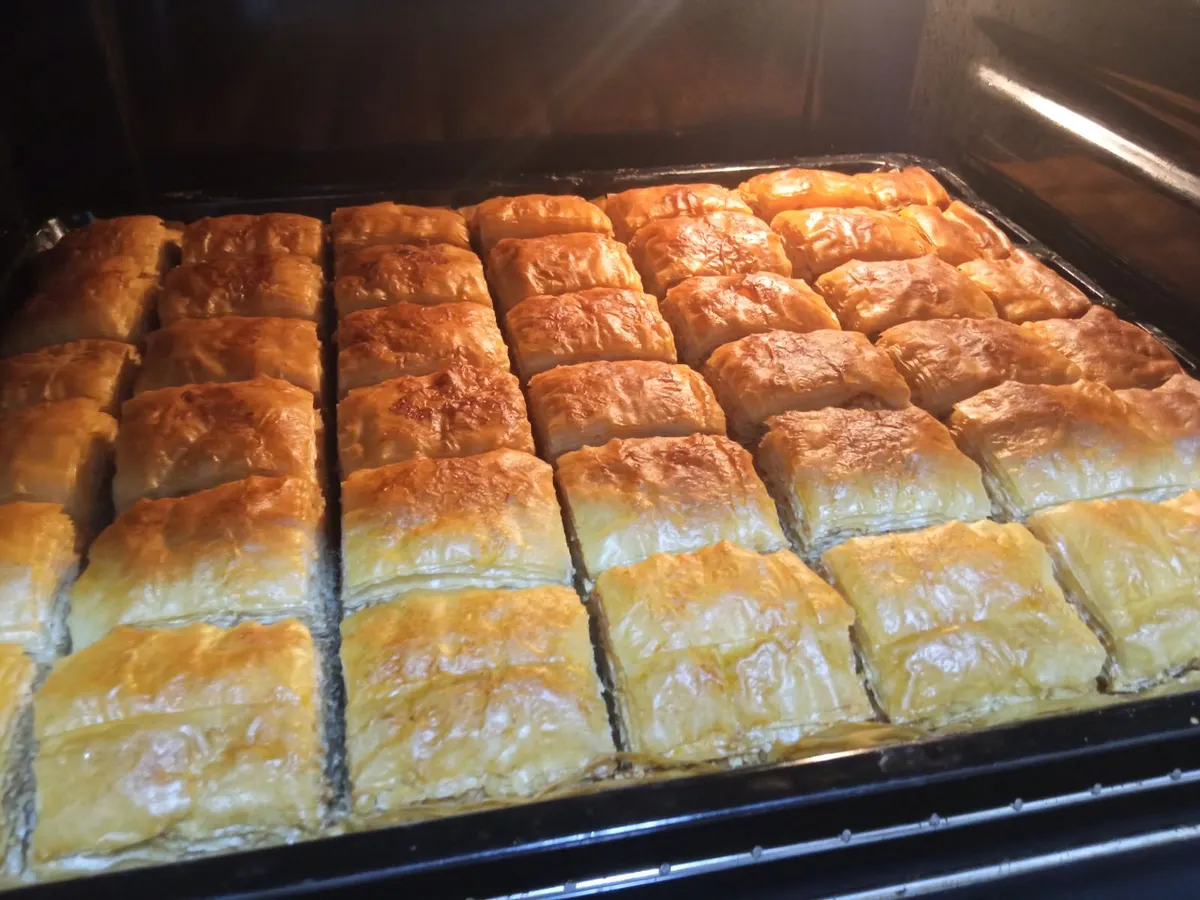
Bosnian Baklava: The Walnut Difference
If you've eaten baklava in Istanbul or Athens, you think you know what you're getting. You don't. Bosnian baklava is its own creature. The most important distinction: walnuts, not pistachios. While Turkish baklava gleams green with pistachio and Greek versions use almonds or a mix, the Bosnian tradition relies almost entirely on locally grown walnuts — rich, slightly bitter, and deeply flavourful.
The construction is similar in principle — layers of thin phyllo dough (called jufka in Bosnian, and traditionally rolled by hand at home) alternating with crushed walnut filling, baked until golden, then drenched in sugar syrup while still hot. But the Bosnian version tends to be heavier on the nut filling and lighter on butter than the Turkish style. The syrup is simpler too — sugar, water, and lemon juice, without the rosewater or orange blossom that appears in Middle Eastern versions.
The result is denser, more rustic, and emphatically nutty. A single piece is substantial. Two is a commitment. Bosnian grandmothers will insist on three.
How It's Made at Home
In Bosnian households, baklava is event food — made for Bajram (Eid), weddings, and celebrations. The jufka dough is rolled paper-thin on a large round table called a sinija, a process that takes skill and practice. Many families still make their own, though ready-made phyllo has made the process more accessible. The walnuts are cracked and crushed by hand — never ground too fine, because the texture matters. You should feel the pieces between your teeth.
The baklava is cut into diamonds before baking (always before, never after — cutting baked baklava shatters the layers), then baked until the top layer turns deep amber. The hot syrup is poured over the hot pastry, and then comes the hardest part: waiting. Good baklava needs at least four hours to absorb the syrup fully. Eating it too soon is a venial sin in Bosnian kitchens.
Tufahija: The Queen of Bosnian Desserts
If baklava is the crowd-pleaser, tufahija is the showstopper. A whole apple, peeled and poached in sugar syrup until tender but not collapsed, then hollowed and stuffed with a mound of sweetened walnut cream. The finished dessert sits in a pool of its own cooking syrup, topped with a swirl of whipped cream and a cherry.
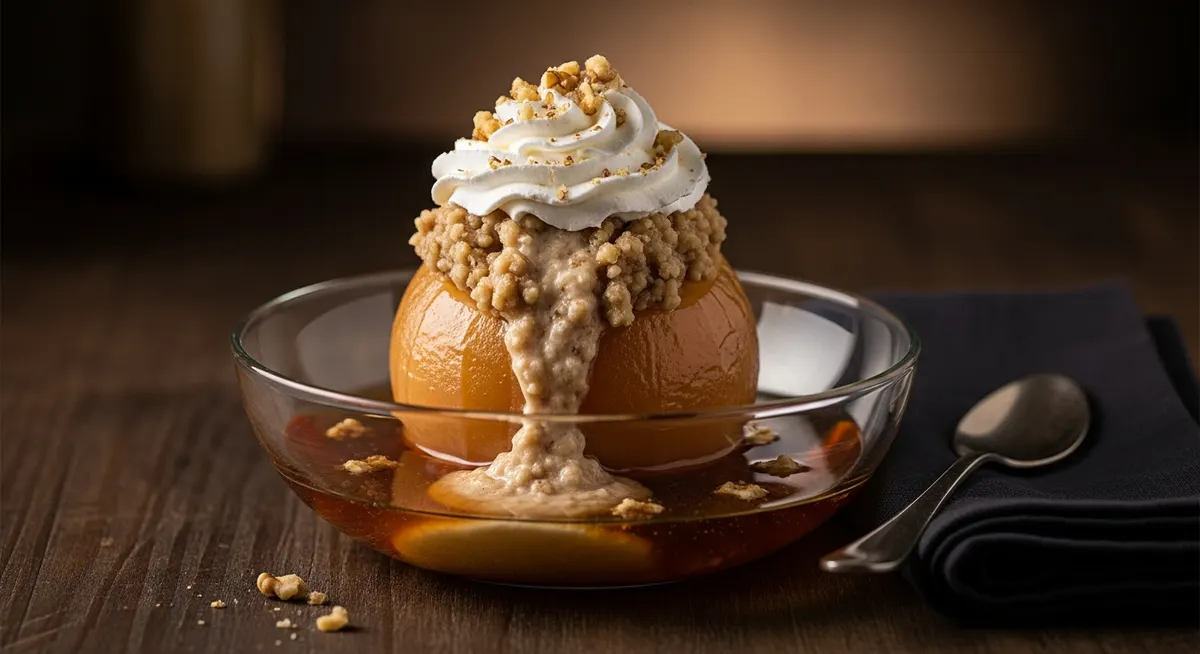
The name comes from the Arabic "tuffah" (apple), a trace of the Ottoman centuries. The technique is pure Bosnia. The apples must be firm — slightly tart varieties work best, as the sweetness of the syrup needs counterbalance. The poaching is gentle and slow, long enough to soften the fruit without losing its shape. The walnut filling is mixed with sugar and sometimes a touch of cinnamon, then piled high inside the hollowed apple.
Tufahija is served cold. At Timber & Stone Tavern, we serve it as a finishing note to the meal — the combination of warm, heavy main dishes followed by a cold, syrupy apple is exactly the contrast a Bosnian dinner demands.
Hurmasice: Syrup-Soaked Perfection
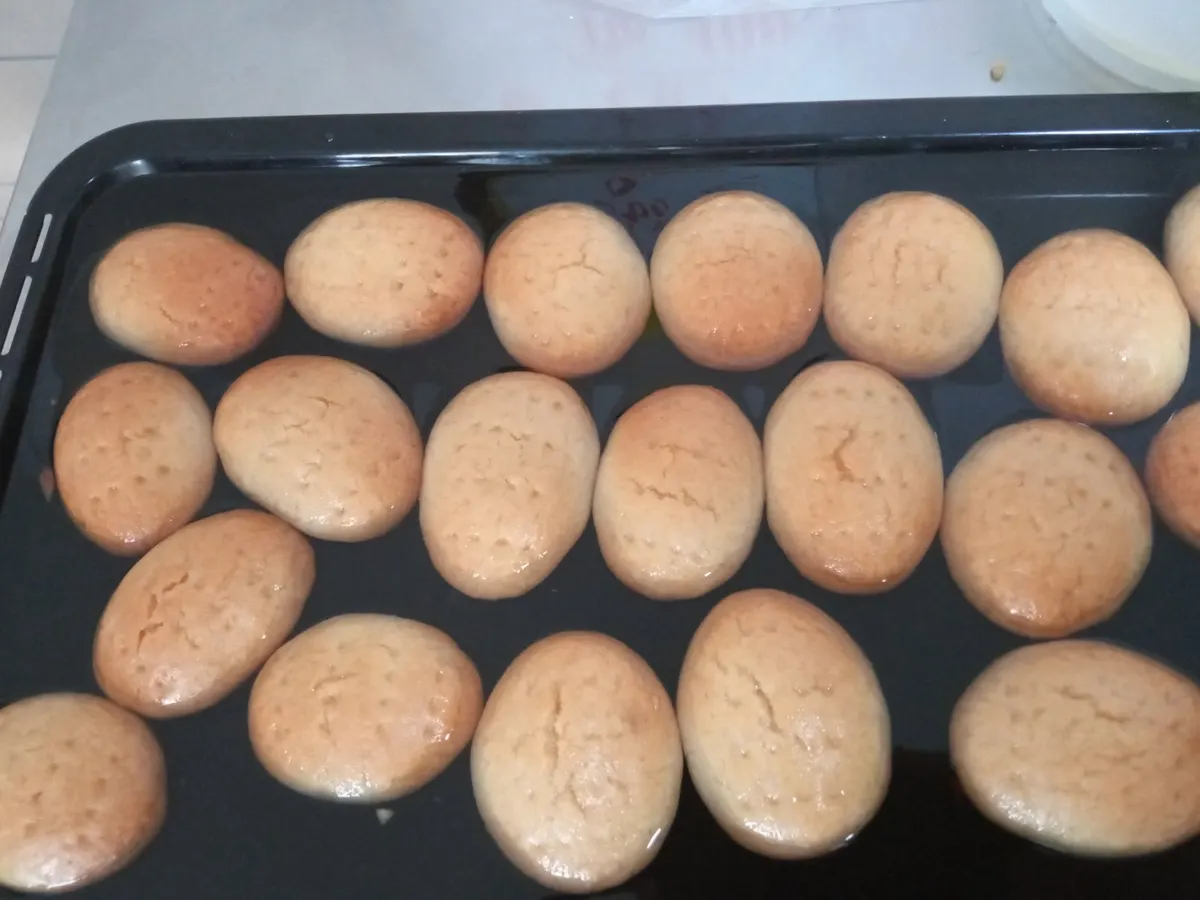
Hurmasice are small, oval-shaped cakes made from a simple dough of flour, yoghurt, butter, and egg, shaped by hand and baked until golden, then immediately plunged into cold sugar syrup. The temperature contrast — hot cake, cold syrup — is what creates their distinctive texture: a thin, slightly crisp shell surrounding a soft, syrup-saturated interior.
They look modest. They taste extraordinary. Each small piece is dense with absorbed sweetness, and the simplicity of the dough lets the syrup do all the talking. Hurmasice are ubiquitous at Bosnian celebrations and easily the most addictive sweet in the entire repertoire. One is never enough. A plate disappears before you notice.
Kadaif and Ruzice
Kadaif uses shredded phyllo dough — thin vermicelli-like strands — layered with the same walnut filling as baklava. The texture is completely different: crispy, almost crunchy strands of pastry surrounding the soft nut centre, all bound together by syrup. It's lighter than baklava in feel, though probably not in calories.
Ruzice — meaning "little roses" — are rolled pastries that look exactly like their name. Thin dough is spread with walnut filling, rolled tightly, then sliced into rounds that resemble rose blossoms when viewed from above. Baked and syrup-soaked like everything else, they're as beautiful as they are sweet. You'll find them at pastry shops throughout Mostar, arranged in neat rows behind glass counters, glistening with syrup.
Herzegovina vs. Sarajevo: A Sweet Divide
Bosnians will debate this passionately. Sarajevo's dessert tradition leans more heavily Ottoman — more refined, more delicate, with greater variety of sherbet-based confections and more elaborate presentations. Herzegovinian desserts tend to be heartier, sweeter, and less concerned with elegance. The walnuts are coarser, the syrup more generous, the portions larger.
Herzegovina also benefits from its Mediterranean-adjacent climate. Local honey is exceptional — wildflower, sage, and heather varieties — and finds its way into desserts more often than in Sarajevo. Figs, pomegranates, and grapes from the Neretva valley appear in seasonal sweets that have no counterpart in the capital. The Herzegovinian approach to dessert, like its approach to most things, is generous to the point of excess.
The Ritual: Sweets with Bosnian Coffee
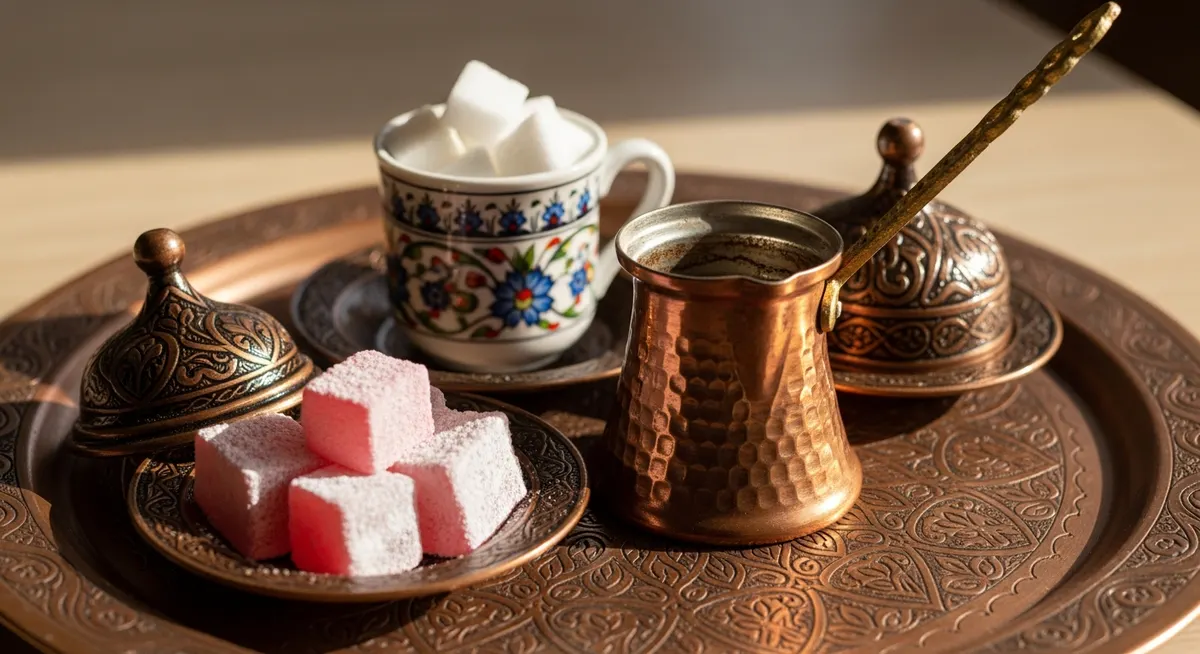
In Bosnia, dessert doesn't end a meal in the Western sense. Sweets are served with coffee — and Bosnian coffee is an entire ritual in itself. The coffee is prepared in a dzezva (a small long-handled brass pot), brought to a foaming boil, and served unfiltered in a fildzan (a small handleless cup). You sip it slowly. The grounds settle. You take a bite of baklava or a sugar cube (or both) between sips.
This is how Bosnians spend their afternoons. The coffee is an excuse to sit, the sweets are an excuse to linger, and the conversation is the actual point. Rushing through Bosnian coffee and dessert is like fast-forwarding through a film — technically possible, but you've missed everything that matters.
"You don't eat Bosnian sweets for dessert. You eat them for the conversation that happens while you're eating them."
Where to Taste Tradition
At Timber & Stone Tavern, we serve tufahija made the traditional way — whole poached apples, walnut cream, cold syrup. It's the perfect end to a meal of sac-roasted meat or bosanski lonac, and we recommend pairing it with a Bosnian coffee served from a hand-hammered dzezva.
For baklava and hurmasice, Mostar's pastry shops — look for signs saying "slasticarna" — are the best source. Buy a kilogram (they sell by weight), take it to a cafe, and order coffee. That's the proper way. Call us at +387 62 607 906 to reserve your table and leave room for something sweet.