Cevapi in Mostar
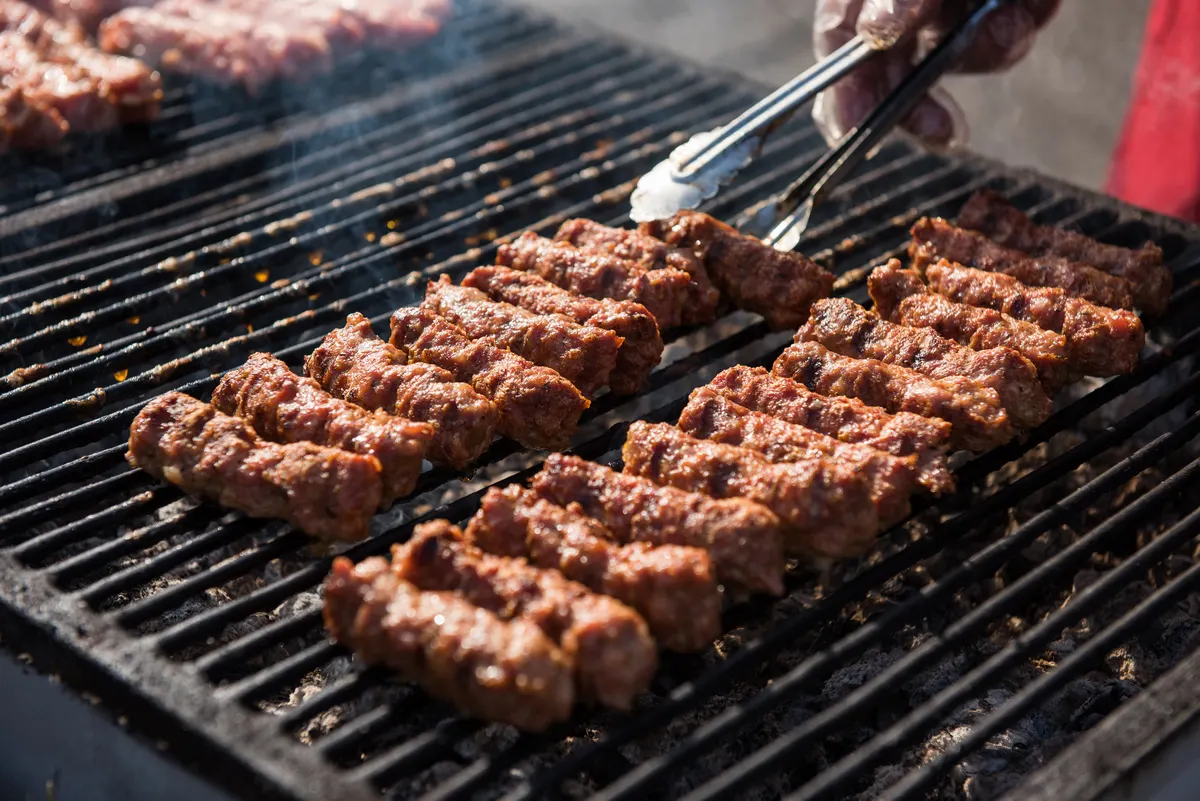
A Brief History of the Mighty Cevap
The word "cevapi" (or ćevapi, if you want to be precise about it) comes from the Persian word "kebab," which arrived in the Balkans through the Ottoman Empire. During nearly four centuries of Ottoman rule, the Balkans absorbed an extraordinary range of culinary techniques, and the grilled minced meat tradition was one that took root deeper than almost any other.
But Bosnian cevapi are not simply kebabs by another name. Over centuries, the dish evolved into something distinctly Bosnian — smaller, more delicate, with a specific meat blend and a serving ritual that would be unrecognizable in Istanbul or Tehran. The earliest cevapi shops in Bosnia date back to the mid-19th century, though the tradition of grilling minced meat over charcoal is certainly much older.
By the early 20th century, cevapi had become the everyday food of Bosnian cities. Specialized shops called ćevabdžinice (try saying that after a rakija) appeared in every town, each with their own closely guarded recipe. The trade was passed from father to son, and many of the most famous cevapi shops in Bosnia today are still run by the same families that founded them generations ago.
What Makes Bosnian Cevapi Unique
Every Balkan country has its own version of cevapi, and every country insists theirs is the original and the best. Serbian cevapi are typically larger, made from a mix of beef and pork, and served with kajmak and ajvar. Croatian cevapi lean toward pure pork in some regions. But Bosnian cevapi occupy their own category entirely.
The Meat
Bosnian cevapi are made from a blend of beef and lamb — never pork, reflecting the country's Islamic culinary heritage. The meat is hand-minced rather than machine-ground, which gives the finished product a more textured, less uniform bite. The seasoning is deliberately minimal: salt, pepper, sometimes a touch of garlic, and occasionally baking soda to achieve a slightly lighter texture. The philosophy is that the quality of the meat should speak for itself.
The Somun
The bread is not an afterthought — it is half the experience. Somun is a round, slightly flattened bread baked in a wood-fired oven, and it arrives at your table still warm. The best somun has a thin, lightly charred crust and a soft, pillowy interior that absorbs the meat juices. A cevapi shop that makes its own somun on-site is always worth seeking out over one that sources it from a bakery.
The Accompaniments
The traditional serving is ruthlessly simple: cevapi nestled in a split somun, topped with finely diced raw white onion. That is it. Purists will tell you that anything else is a corruption. However, kajmak — the thick, tangy clotted cream made from slowly heated milk — is a widely accepted addition, and in Herzegovina you will sometimes see a mild fresh cheese offered alongside.
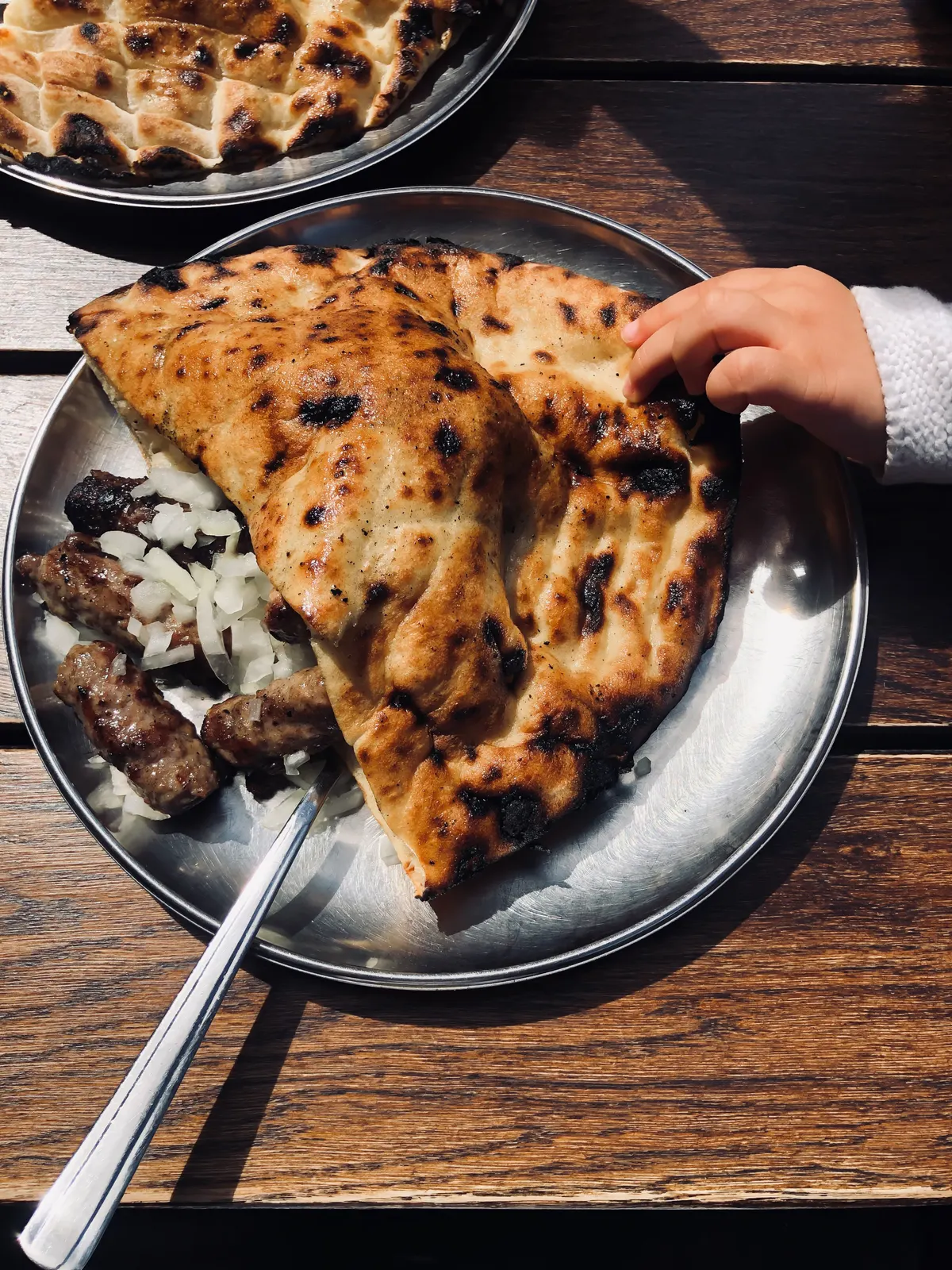
Mostar vs Sarajevo: The Great Debate
This is dangerous territory, but it needs to be addressed. Sarajevo and Mostar have fundamentally different approaches to cevapi, and suggesting that one is better than the other in mixed company is a reliable way to start an argument.
Sarajevo-style cevapi are the more famous version. They are typically served in portions of five or ten, arranged in a row inside the somun. The meat blend is predominantly beef, the cevapi themselves are slightly thicker, and kajmak is always available. The most famous Sarajevo cevapi shops — Željo, Petica, Hodžić — have been serving since the early 1900s.
Mostar-style cevapi tend to be thinner and slightly shorter, with a higher proportion of lamb in the blend. The Herzegovinian climate and pastoral traditions mean that lamb has always been more available here than in the Sarajevo valley. The onions are cut slightly differently — finer, almost minced — and the overall flavour profile is marginally more delicate. Some Mostar shops serve their cevapi with a thin tomato-based sauce on the side, which would cause genuine distress in Sarajevo.
"In Sarajevo, they will tell you their cevapi are the best. In Mostar, we simply let you taste ours and draw your own conclusion."
How to Eat Cevapi Like a Local
There is a right way to eat cevapi, and watching tourists do it wrong causes Bosnians physical pain. Here are the rules:
- Never use a knife and fork. Cevapi are eaten with your hands, using the somun to grip the meat. This is not optional.
- Do not ask for ketchup. This will mark you as someone who cannot be trusted. If you need a condiment, kajmak is the only acceptable choice.
- Eat them fresh. Cevapi that have been sitting for more than a few minutes are cevapi that have lost their soul. Eat them the moment they arrive.
- Order the right amount. A standard portion is five or ten pieces. If you are genuinely hungry, order ten. If you are not sure, order five and then order more. There is no shame in a second plate.
- Drink yoghurt or water. The traditional pairing is plain drinking yoghurt or water. Ayran (salted yoghurt drink) also works well. Beer is acceptable but not traditional.
Finding the Best Cevapi in Mostar
The best cevapi in Mostar are not in the restaurants along the river or in the tourist zone near Stari Most. They are in the small, unassuming shops near the markets and in the neighbourhoods where locals actually eat. Look for places with a visible charcoal grill, a short menu (cevapi, maybe a few other grilled items, and that is it), and a crowd of locals. If the somun is baked on-site, you are in the right place.
The area around Mala Tepa and the streets leading away from the Old Town toward the east bank are reliable hunting grounds. Do not be put off by the lack of English menus or Instagram-friendly interiors. The best cevapi shops in Bosnia have looked exactly the same for fifty years, and that is part of their charm.
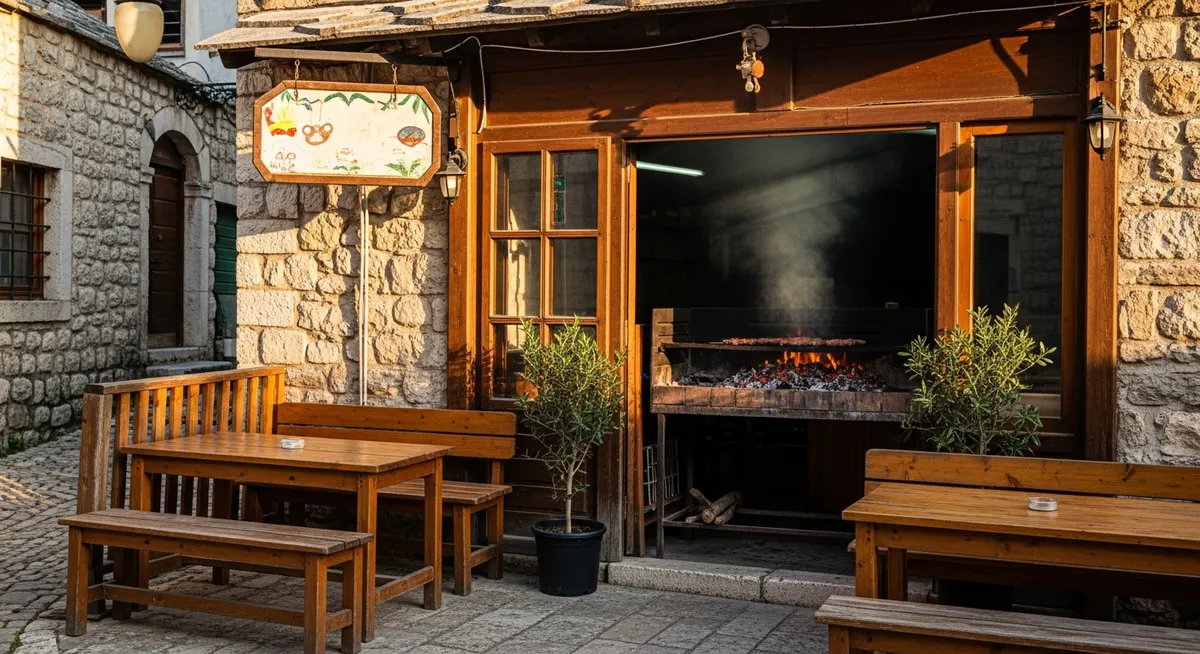
Beyond Cevapi: Another Kind of Tradition
While cevapi are the quick, everyday staple of Bosnian life, they represent only one thread of a much richer culinary tapestry. Mostar's food traditions extend far beyond the grill — into the slow, patient world of hearth cooking that defined the medieval Bosnian Kingdom.
At Timber & Stone Tavern, we focus on the other side of that tradition: sač-cooked meats that spend hours under the iron bell, bosanski lonac simmered in clay pots, and dishes prepared over open flame the way they have been for centuries. We do not serve cevapi — not because we do not love them, but because the grill tradition is already beautifully represented across Mostar. Our kitchen is dedicated to the slower, older techniques that require time, fire, and patience.
If you want the full picture of what Bosnian food can be, eat cevapi for lunch at one of Mostar's legendary shops, and then join us in the evening for a sač feast that takes you back to the medieval hearth. That is how you eat your way through this city properly.
To learn more about our hearth-cooked menu or to plan your evening, call us at +387 62 607 906 or reserve a table online.