Bosnian Dolma
What Is Bosnian Dolma?
The word "dolma" comes from the Turkish "dolmak" — to fill or to stuff. In the broadest sense, dolma refers to any vegetable that has been hollowed out, filled with a savoury mixture, and cooked. But in Bosnia, dolma has evolved into something more specific and more deeply woven into daily life than in any neighbouring country.
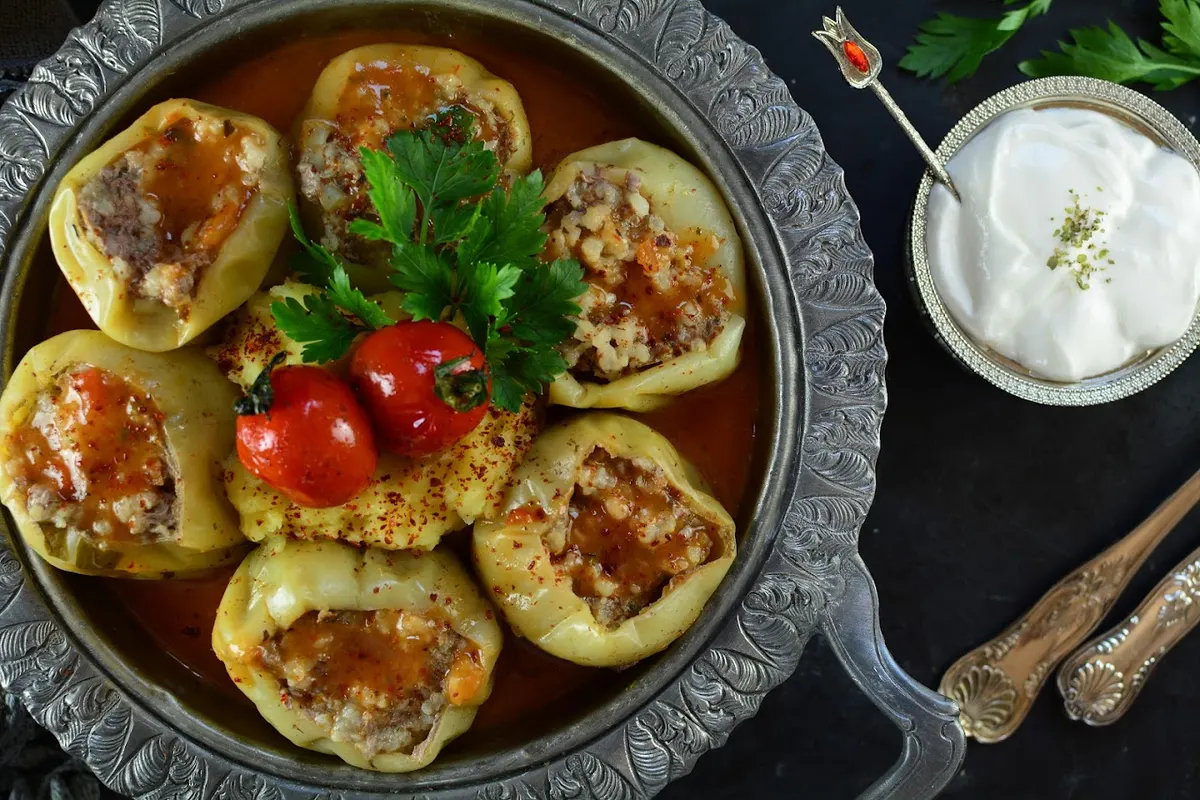
Bosnian dolma typically refers to peppers, onions, courgettes, or tomatoes stuffed with a mixture of minced meat (usually beef, sometimes a beef-lamb blend), rice, onion, and spices. The stuffed vegetables are packed tightly into a heavy pot, covered with a tomato-based sauce, and braised slowly until everything is tender and the flavours have concentrated.
The dish arrived in Bosnia during Ottoman rule, but over four centuries it has been transformed into something distinctly Bosnian — heartier, more generously spiced with paprika, and served with accompaniments (like sour cream and bread) that have no Ottoman precedent.
Dolma vs. Japrak vs. Sarma
These three dishes are related but distinct, and Bosnians are particular about the terminology:
- Dolma — stuffed vegetables (peppers, onions, courgettes, tomatoes). The vegetable itself is the container.
- Japrak — the same filling wrapped in grape vine leaves or sometimes young collard greens (raštika). A summer dish, made when the grape leaves are tender.
- Sarma — the same filling wrapped in pickled cabbage leaves. A winter dish, traditional at celebrations and especially popular during the colder months.
All three use essentially the same filling but the wrapping changes with the season — vine leaves in summer, fresh cabbage in autumn, pickled cabbage in winter. This seasonal rotation is deeply embedded in Bosnian cooking culture and reflects the practical rhythms of a cuisine that was, until very recently, entirely dependent on what the land provided at that moment.
The Filling: Where Families Disagree
The basic dolma filling is simple: minced beef, rice, finely chopped onion, salt, pepper, and paprika. But it is the variations beyond this base that spark family debates across Bosnia. Some families add a touch of dried mint. Others insist on a pinch of cinnamon — an Ottoman echo that divides opinion sharply. Garlic is standard in some households and forbidden in others.
The meat-to-rice ratio is another point of contention. A generous filling has more meat than rice; a more traditional (and more economical) version tips the balance toward rice. In Herzegovina, where the cooking leans slightly Mediterranean, you may find parsley or even a small amount of tomato paste mixed into the raw filling before stuffing.
The one thing all Bosnian cooks agree on: the rice goes in raw. It cooks inside the vegetable during the long braising process, absorbing the meat juices and tomato sauce. Using pre-cooked rice is considered a shortcut that produces inferior results.
How Bosnian Dolma Differs from Turkish
While the concept came from the Ottoman kitchen, Bosnian dolma has diverged significantly from its Turkish ancestor. The differences are not subtle:
- Spicing: Turkish dolma often features pine nuts, currants, allspice, and cinnamon. Bosnian dolma is spiced primarily with paprika and black pepper — simpler, more direct.
- Serving: Turkish dolma is sometimes served cold, especially the olive-oil-based vegetarian versions. Bosnian dolma is always served hot, with a generous dollop of sour cream (pavlaka).
- Accompaniments: In Turkey, dolma is one component of a mezze spread. In Bosnia, it is the main event — a full meal served with bread and pavlaka, period.
- Portion size: Bosnian portions are dramatically larger. A serving of dolma in Bosnia could comfortably feed two people in Istanbul.
The Pepper Question
The choice of pepper matters more than most visitors realise. Traditional Bosnian dolma uses a specific type of pepper — the long, pale green Bosnian pepper (sometimes called the "Hergovina pepper" or "babura") that is mild, thin-walled, and perfectly shaped for stuffing. These peppers are not sweet bells; they have a subtle bitterness that balances the rich meat filling.
In late summer and early autumn, when these peppers are at their peak, dolma season reaches its height. Bosnian families will spend entire weekends making dolma in bulk — stuffing dozens of peppers, cooking them in the largest pot available, and eating them for days. Leftover dolma, reheated the next day, is widely considered to be better than the fresh version.
Making Dolma at Home
The process is straightforward but time-consuming. The peppers are cored and cleaned, the filling is mixed by hand, each pepper is carefully stuffed and packed upright into a heavy pot. A sauce of tomato, water, and a little oil is poured over the top — just enough to come halfway up the peppers. The pot is covered and left on low heat for at least two hours.
The slow cooking is essential. The peppers soften gradually, the rice inside swells and absorbs the meat juices, and the tomato sauce reduces and concentrates. By the time the dish is ready, the flavours have melded into something far greater than the sum of its parts. The house smells like a Bosnian grandmother's kitchen, which is the highest compliment this cuisine can receive.
Dolma at Timber & Stone
At Timber & Stone Tavern, our japrak and dolma is one of our most popular dishes. We prepare it with beef mince and rice rolled in collard greens and stuffed peppers, served with potato mash and cream — the way it is done in Herzegovinian homes where the dish is not a side plate but the centrepiece of the meal.
Our recipe follows the traditional Herzegovinian approach: simple seasoning (paprika, pepper, a little garlic), raw rice in the filling, long slow cooking, and a generous portion that leaves no room for doubt about whether you have eaten enough. Served at our communal oak tables, alongside warm bread and a glass of Herzegovinian wine, it is home cooking elevated to something worth travelling for.
"Dolma is not restaurant food — it is family food. We just happen to treat our guests like family."
Where to Find the Best Dolma in Mostar
The best dolma in Mostar is found in two places: at home and at traditional restaurants (ašćinice) that cook daily specials in the morning and serve them until they run out. The west-side ašćinice often have dolma on their rotation, especially in late summer when the peppers are in season.
In the Old Town, fewer restaurants serve dolma because it requires advance preparation and does not lend itself to à la carte cooking. The restaurants that do offer it are the ones worth seeking out — they are the ones committed to the full spectrum of Bosnian cooking rather than just the tourist-friendly greatest hits.
For dolma prepared with care and the patience it deserves, reserve a table at Timber & Stone or call us at +387 62 607 906. We will make sure the pot is ready when you arrive.