Sač Cooking: The Medieval Iron Bell
What Is a Sač?
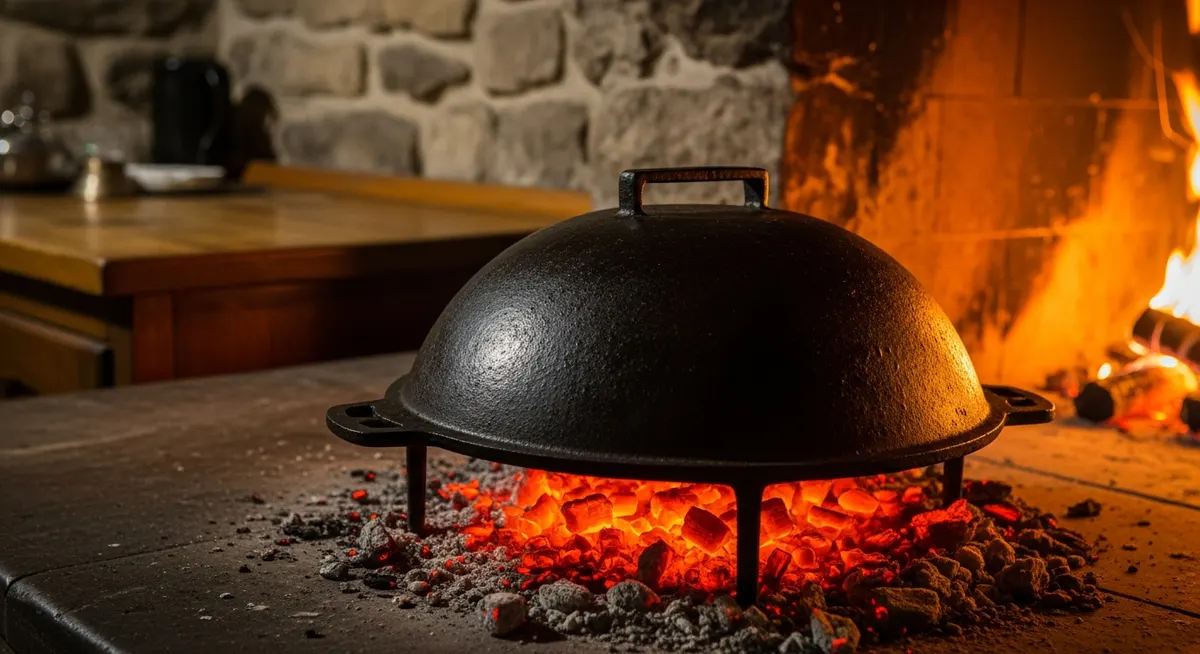
A sač (pronounced "satch") is a large, dome-shaped lid made of cast iron or, in older traditions, heavy clay. It is one of the simplest and most ingenious cooking devices ever invented. The concept is straightforward: food is placed in a shallow pan or directly on a stone surface, the sač bell is placed over it, and then hot embers and coals are heaped on top of and around the bell. The result is an improvised oven that provides heat from all directions — above, below, and from the sides.
The magic of sač cooking lies in what happens inside that dome. As the embers heat the iron, the bell radiates consistent, even warmth in every direction. Moisture released from the meat and vegetables has nowhere to go — it condenses on the inside of the bell and drips back down, continuously basting the food in its own juices. It is simultaneously roasting, steaming, and braising, all at once, for hours on end.
The sač is also sometimes called a peka (particularly in Croatian and Dalmatian cooking traditions), and the phrase "ispod sača" — literally "under the sač" — is how these dishes appear on restaurant menus throughout Bosnia and Herzegovina.
A History Older Than the Ottoman Empire
Most people assume that Bosnian food traditions begin with the Ottoman conquest in the 15th century. But sač cooking predates the Ottomans by a wide margin. Archaeological evidence suggests that bell-shaped cooking implements were used across the Balkans and Mediterranean going back thousands of years — the Romans had a similar device called a testum, and the ancient Greeks used clay versions called a klibanos.
In Bosnia specifically, sač cooking was a central part of the medieval Bosnian Kingdom's food culture. The kingdom, which existed from the 12th to the 15th century, was a land of fortified towns, highland pastures, and thick forests. Its people — the Bosnian nobles and the communities they governed — relied on hearth cooking as their primary method of preparing meat. There were no grand court kitchens like those in Western Europe; instead, there were hearths, fire pits, and iron bells.
The sač was the ideal tool for this world. It required no infrastructure beyond a fire and a flat surface. It could cook a feast for a nobleman's household or a simple meal for a shepherd. And it produced food of extraordinary quality — tender, richly flavoured, and deeply satisfying — with minimal effort once the fire was set.
How Sač Cooking Works
The process begins long before the food goes under the bell. At Timber & Stone Tavern, we start our sač preparations in the morning for evening service. Here is what happens:
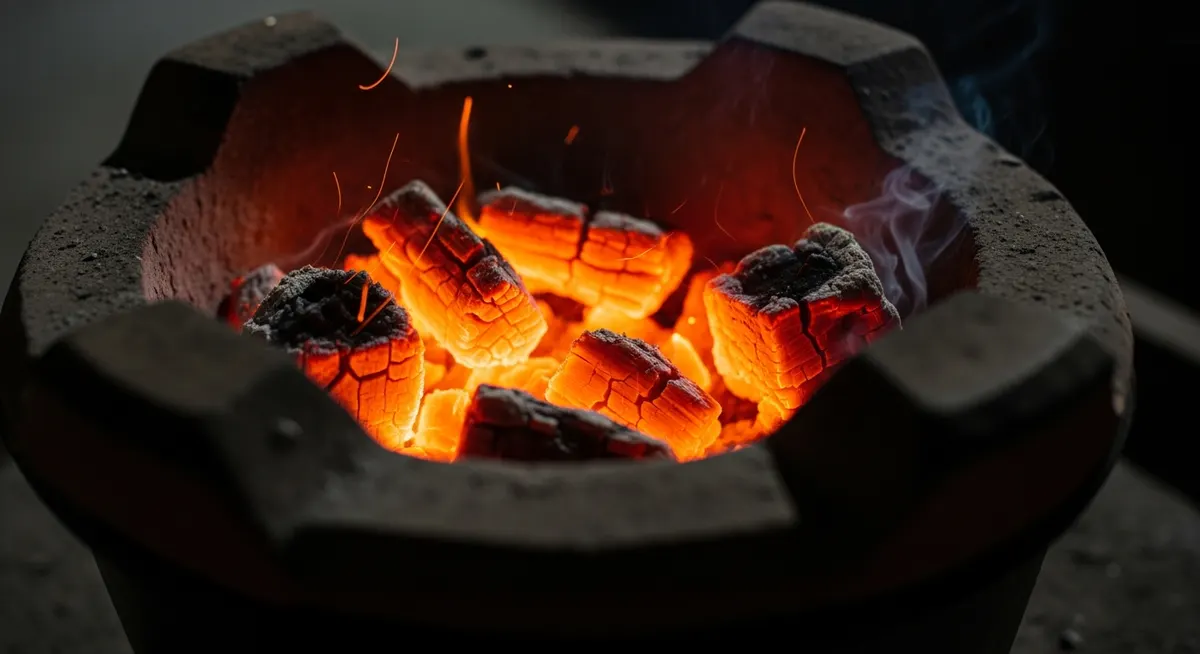
- Building the fire: A hardwood fire — oak or beech, never softwood — is built and allowed to burn down to a thick bed of embers. This takes one to two hours. The quality of the embers is everything; they need to provide steady, long-lasting heat.
- Preparing the food: The meat — typically a whole leg of lamb or a large piece of veal — is seasoned simply with salt, pepper, garlic, and olive oil. It is placed on a bed of roughly chopped potatoes, onions, carrots, and whatever seasonal vegetables are available. Sometimes a splash of water or wine goes in to start the steaming process.
- Sealing the bell: The sač is placed over the food and pressed down firmly. Some cooks seal the edge with a strip of dough or wet cloth to trap every bit of moisture inside.
- Covering with embers: Hot coals and embers are heaped over and around the bell until it is completely buried. Fresh embers are added periodically over the next several hours to maintain consistent temperature.
- Waiting: This is the hardest part, and the most important. A proper sač lamb takes six to eight hours. There is no peeking, no stirring, no adjusting. You trust the fire and the iron and the passage of time.
- The reveal: When the time comes, the embers are brushed away and the bell is lifted. The steam that escapes carries an aroma that is impossible to describe adequately — rich, herbaceous, deeply meaty, with the sweet caramel notes of slow-roasted vegetables.
"You cannot rush the sač. Eight hours is eight hours. The fire knows when it is ready — your job is to trust it."
What Gets Cooked Under the Sač
While lamb is the most iconic sač dish, the technique is remarkably versatile:
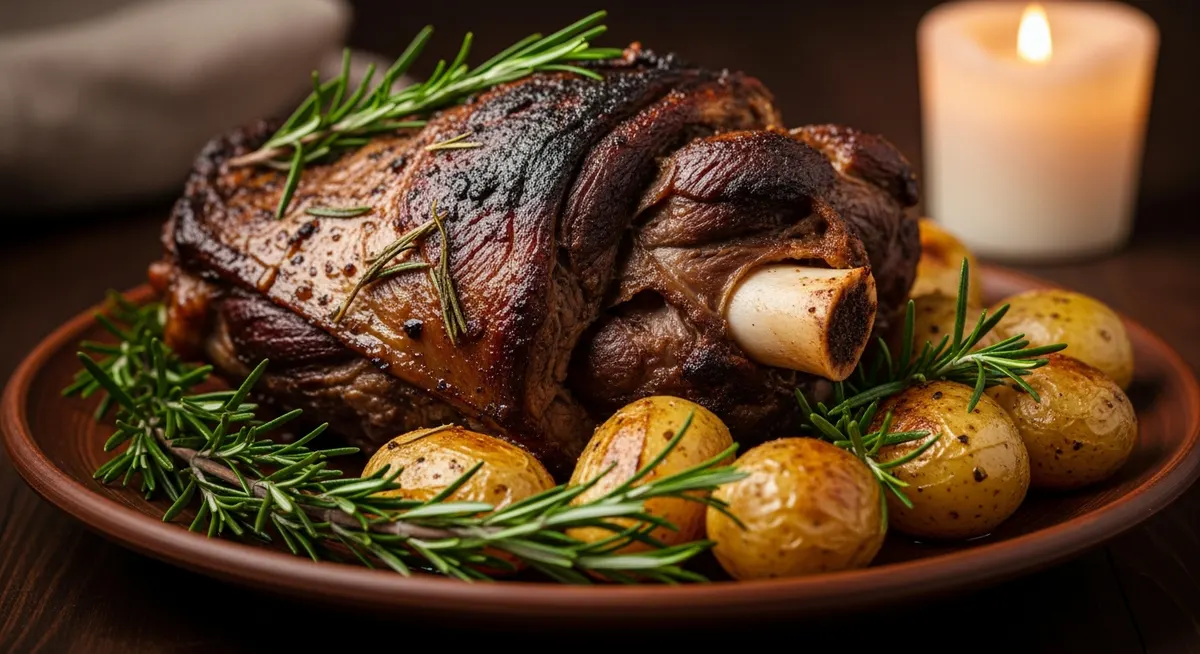
- Jagnjetina ispod sača — lamb under the bell. The crown jewel. A whole leg or shoulder, cooked until the meat falls from the bone at the touch of a fork.
- Teletina ispod sača — veal under the bell. Slightly more delicate than lamb, with a milder flavour that lets the vegetables shine.
- Octopus ispod peke — common along the Dalmatian coast and in parts of Herzegovina. The sač turns tough octopus impossibly tender.
- Vegetables ispod sača — potatoes, peppers, courgettes, and onions cooked under the bell without meat. A deeply flavoured vegetarian option that proves the technique works beautifully even without animal protein.
- Bread under the sač — the oldest use of all. Flatbreads and loaves baked under the iron bell develop a crust that no conventional oven can replicate.
The Ritual of Sač Dining
Eating sač food is not like ordering from a menu and waiting twenty minutes. It is a commitment — from both the kitchen and the guest. Because the preparation takes so many hours, sač dishes must be ordered well in advance. At most restaurants in Mostar that serve authentic sač, you need to call at least six to eight hours ahead, sometimes the day before.
This advance planning is part of what makes sač dining special. It transforms a meal from a casual decision into a deliberate act — something anticipated, prepared for, and shared with the people who matter to you. When the bell is finally lifted and the lamb is set on the table, the moment carries weight. You have been waiting for this. Everyone at the table has been waiting for this. And the food, without exception, delivers.
Sač meals are communal by nature. The food arrives in the same pan it was cooked in, placed in the centre of the table, and everyone serves themselves. Bread is passed around. Wine is poured. The conversation slows down because the food demands attention. This is how meals were shared in medieval Bosnia — around long tables, from common dishes, with no rush and no pretence.
Sač at Timber & Stone Tavern
At Timber & Stone Tavern, sač cooking is not a menu item — it is the foundation of everything we do. Our restaurant was built around the hearth, and the iron bell is the most important tool in our kitchen. We serve lamb and veal under the sač, cooked over oak embers for a minimum of eight hours, accompanied by seasonal vegetables from Herzegovinian farms and bread baked on the stone.
Because of the preparation time, we ask guests to order sač dishes at least eight hours in advance by calling +387 62 607 906. We know that requires planning. We also know that the first bite will make you glad you planned.
The medieval Bosnian Kingdom may have faded from history, but the way they cooked — slowly, patiently, with respect for the fire and the ingredients — lives on under every sač bell in Herzegovina. Reserve a table and taste what centuries of tradition can do to a piece of lamb and a bed of embers.