Things to Do in Mostar: A Local's Guide
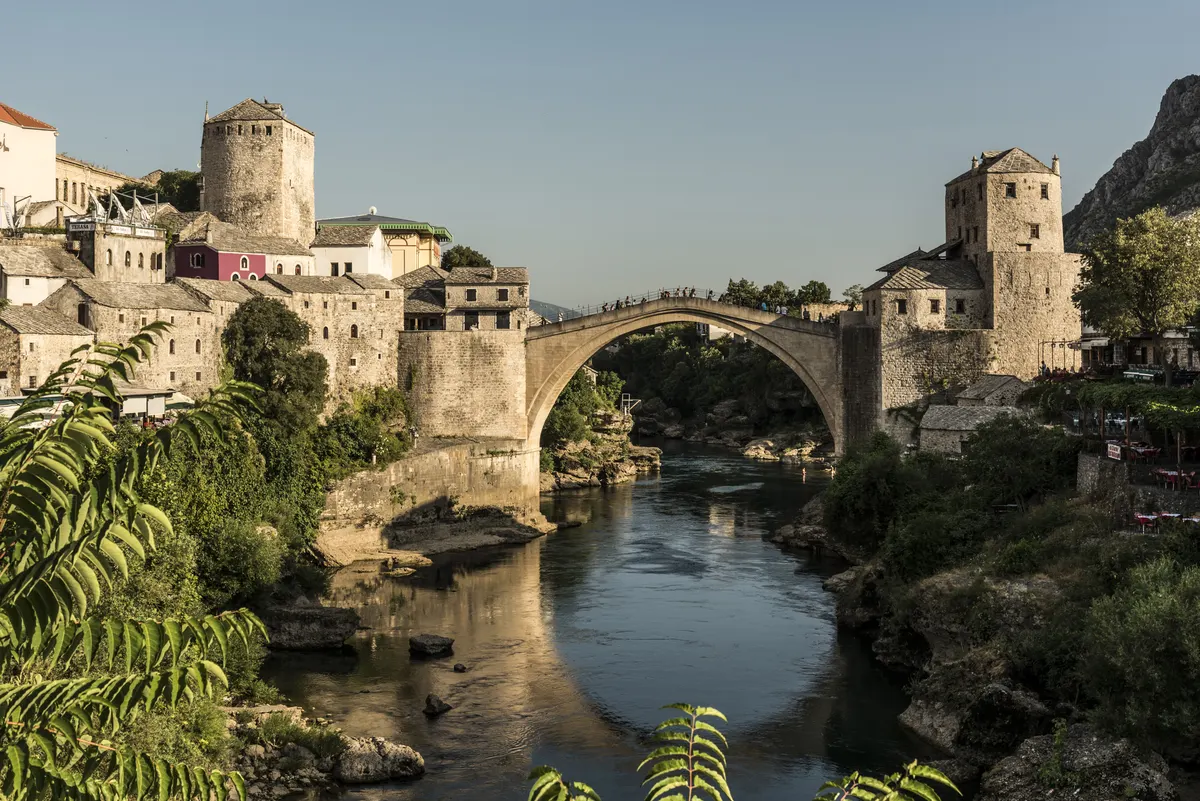
Stari Most and the Diving Tradition
Start where everyone starts — at the bridge. Stari Most was built in 1566 by Ottoman architect Mimar Hayruddin, and for over four centuries it connected the two halves of Mostar across the emerald Neretva. When it was destroyed in 1993, something broke in the city's soul. Its reconstruction in 2004, using the same local tenelija stone and the same Ottoman engineering techniques, was an act of collective memory.
If you visit in summer, you'll see the divers. Young men from the local diving club have been leaping from the bridge's 24-metre apex for centuries — it's a rite of passage, not a tourist stunt. They'll collect money from spectators beforehand, then stand on the parapet for what feels like an impossibly long time before plunging into the freezing Neretva below. The water never gets warm. Even in August, it runs cold enough to take your breath away.
Visit early morning or late afternoon to avoid the midday crowds. The light is better, the stone glows warmer, and you can actually hear the river.
Kujundziluk: The Old Bazaar
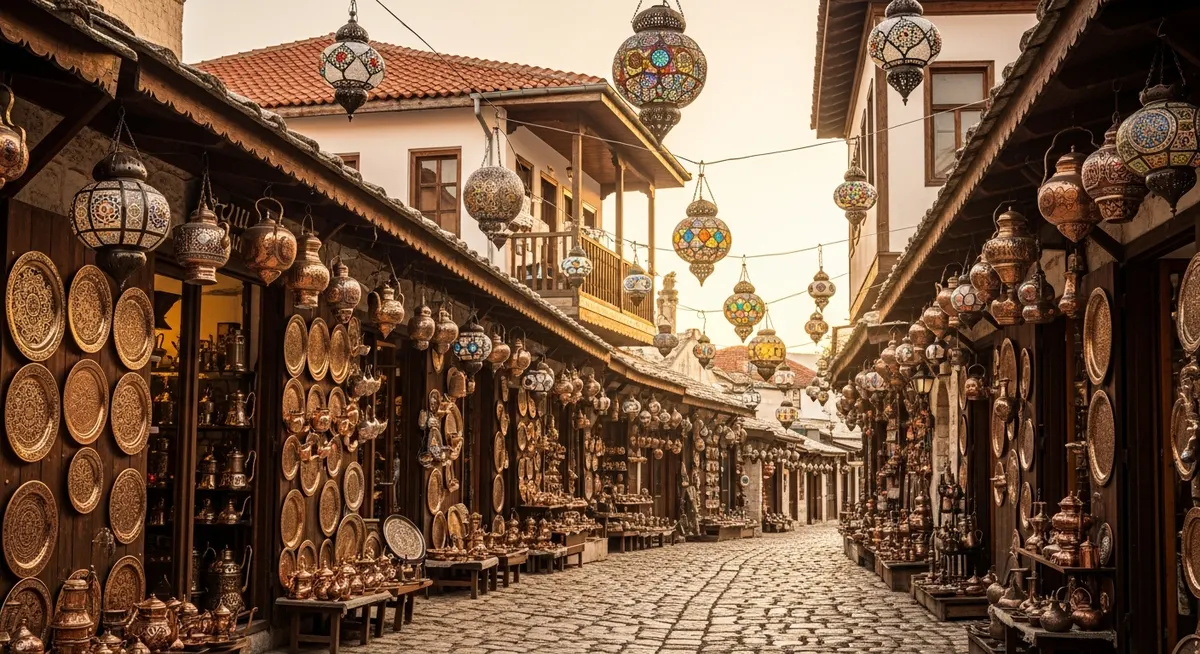
The cobblestone streets on either side of Stari Most form the Kujundziluk bazaar — once a metalworkers' quarter, now a winding market of copperware, handmade jewellery, Turkish lamps, and Bosnian coffee sets. Yes, it's touristy. But the craftsmanship is real, and if you duck into the smaller side streets, you'll find workshops where artisans still hammer copper by hand, the same way their predecessors did four hundred years ago.
Look for hand-engraved dzezvas (the small brass pots for Bosnian coffee) and stecak-motif jewellery. The best pieces aren't in the shops facing the main lane — they're one street back, where the rent is lower and the work is finer.
Koski Mehmed Pasha Mosque
Of the several mosques in Mostar's old town, Koski Mehmed Pasha (built 1618) offers the most rewarding visit. The interior is modest and peaceful — pale walls, woven carpets, soft light through stained glass. But the real draw is the minaret. Climb the narrow spiral staircase (it's tight, and the steps are worn smooth) and you'll emerge onto a small balcony with the finest panoramic view in the city: the bridge below, the Neretva curving through the valley, the minarets and red roofs stretching toward the mountains.
A small entrance fee covers both the mosque and the minaret. It's worth every mark.
Blagaj Tekke: The Dervish House on the River
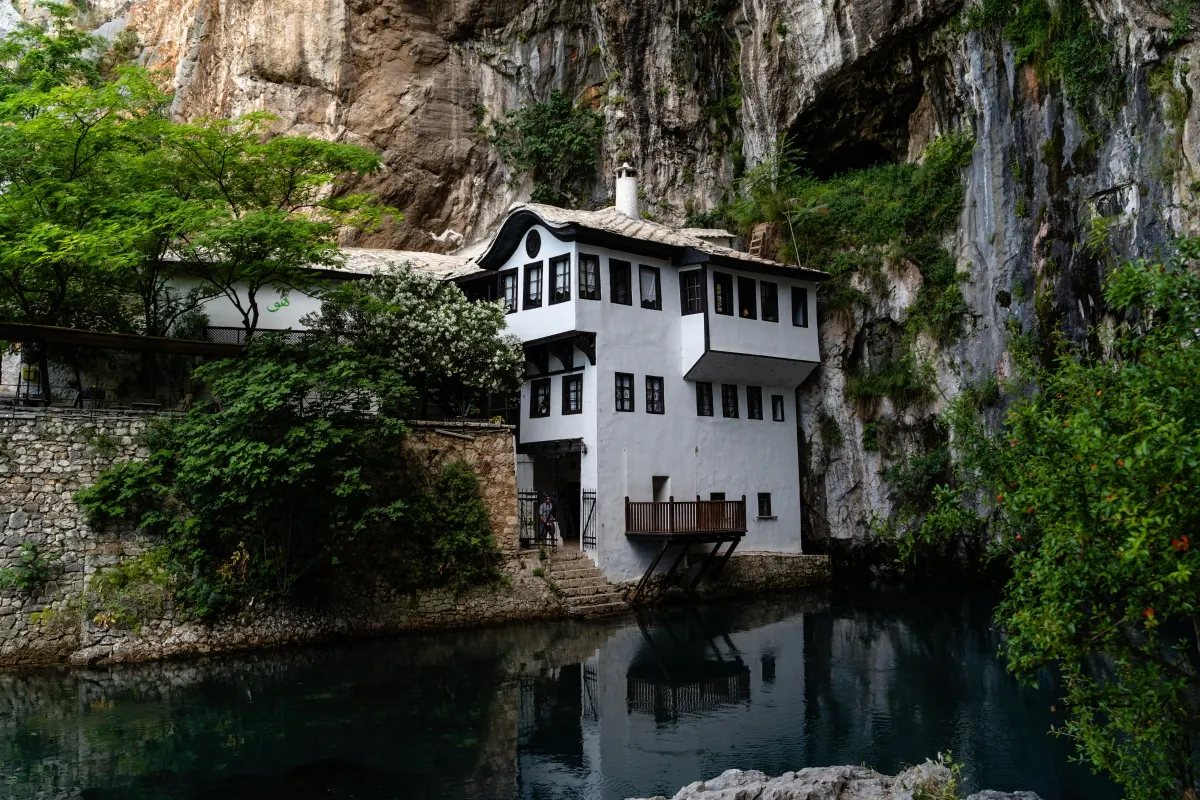
Twelve kilometres south of Mostar, where the Buna River surges fully formed from a cave at the base of a sheer cliff, sits the Blagaj Tekke — a 16th-century Dervish monastery that looks like it was dreamed into existence. The building clings to the rock face above water so clear it barely seems real.
The tekke is still a functioning spiritual site. You can enter, see the prayer halls and the tombs of the dervish leaders, and sit in the courtyard where the river thunders past. Afterwards, the riverside restaurants serve excellent trout — pulled from the Buna that same morning.
You can reach Blagaj by local bus, taxi, or a 20-minute drive. Go early. By noon in summer, the small car park overflows and the magic dilutes.
The Partisan Memorial Cemetery
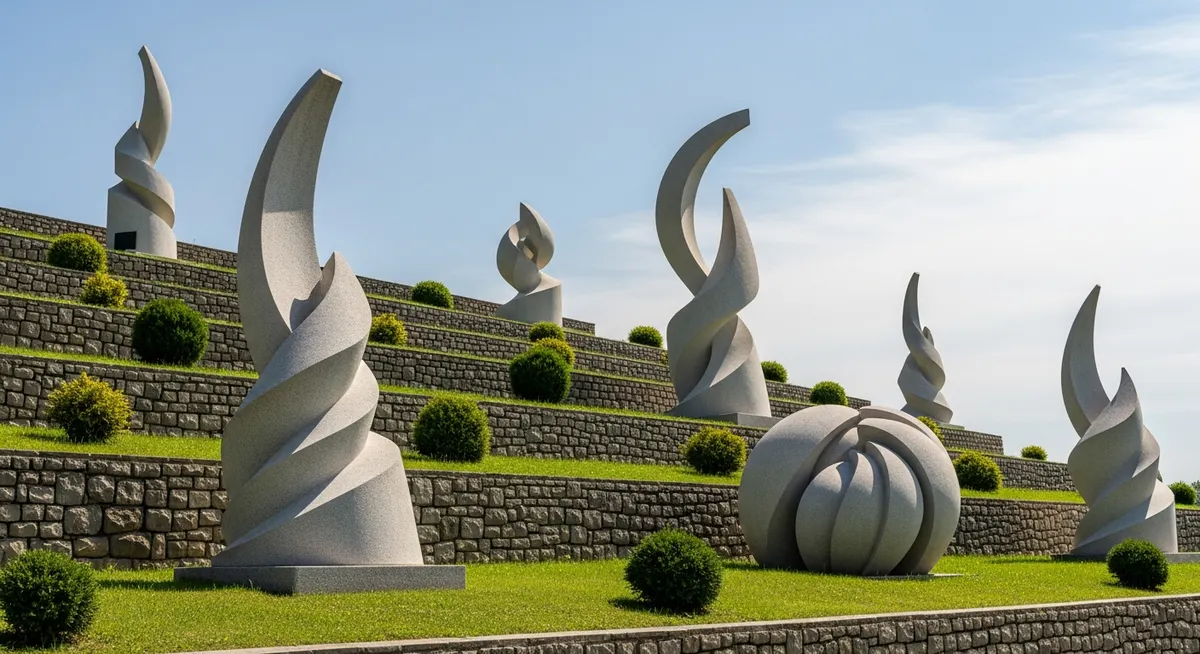
This is the sight most visitors miss, and it's the one that stays with you longest. Designed by sculptor Bogdan Bogdanovic in 1965, the Partisan Memorial Cemetery on the western hill above Mostar is a masterpiece of abstract monumental art. Terraced into the hillside, the cemetery uses organic stone forms — spiralling paths, wing-like markers, abstract floral sculptures — to honour the fallen without a single conventional headstone.
Bogdanovic called his memorials "stone flowers." This one is among his finest. The views over Mostar are stunning, the atmosphere is contemplative, and on most days you'll have the place almost entirely to yourself. A 15-minute walk uphill from the centre, or a short taxi ride.
Stecci: Bosnia's UNESCO Medieval Tombstones
Scattered across the hills of Herzegovina are the stecci — monumental medieval tombstones carved between the 12th and 16th centuries by the people of the Bosnian Kingdom. Inscribed with spirals, deer, swords, dancing figures, and vine motifs, they're unlike any funerary art in Europe. In 2016, a selection of stecak sites across four countries was granted UNESCO World Heritage status.
The nearest major site to Mostar is at Radimlja, near Stolac — about 40 minutes by car. The carvings there are exceptionally well-preserved, with figures that seem to wave at you across six centuries. It's a profound and quietly moving place. If the medieval Bosnian aesthetic interests you, these tombstones are where it all begins.
Fortica Sky Walk: The View Above Everything
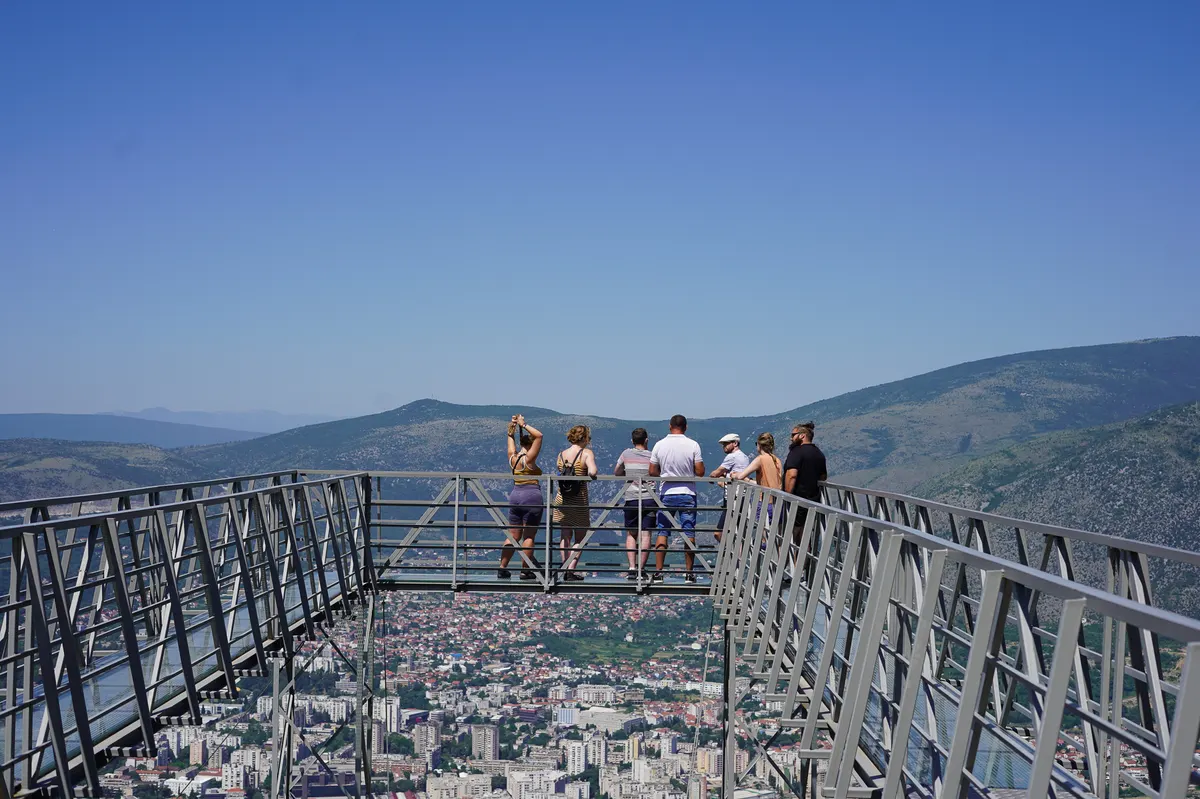
High above Mostar's western bank, the ruins of the Fortica fortress have been transformed into one of Herzegovina's most dramatic viewpoints. The Sky Walk — a glass-floored platform extending out from the fortress walls — puts you 200 metres above the Neretva valley with nothing between you and the drop but transparent glass underfoot.
The panorama is staggering: the entire city laid out below, Stari Most miniaturised by distance, the Neretva winding through the valley toward the Adriatic, and on clear days, the mountains of central Bosnia on the northern horizon. Come at sunset when the light turns the stone walls gold and the city glows beneath you. The fortress itself dates to the Ottoman period, though fortifications on this hill go back much further — some historians trace them to the medieval Bosnian Kingdom.
It's a steep 20-minute walk up from the city centre, or a short taxi ride. There's a small entrance fee, and a cafe at the top where you can recover with a cold drink and the best view in Herzegovina.
Pocitelj: The Fortified Medieval Village
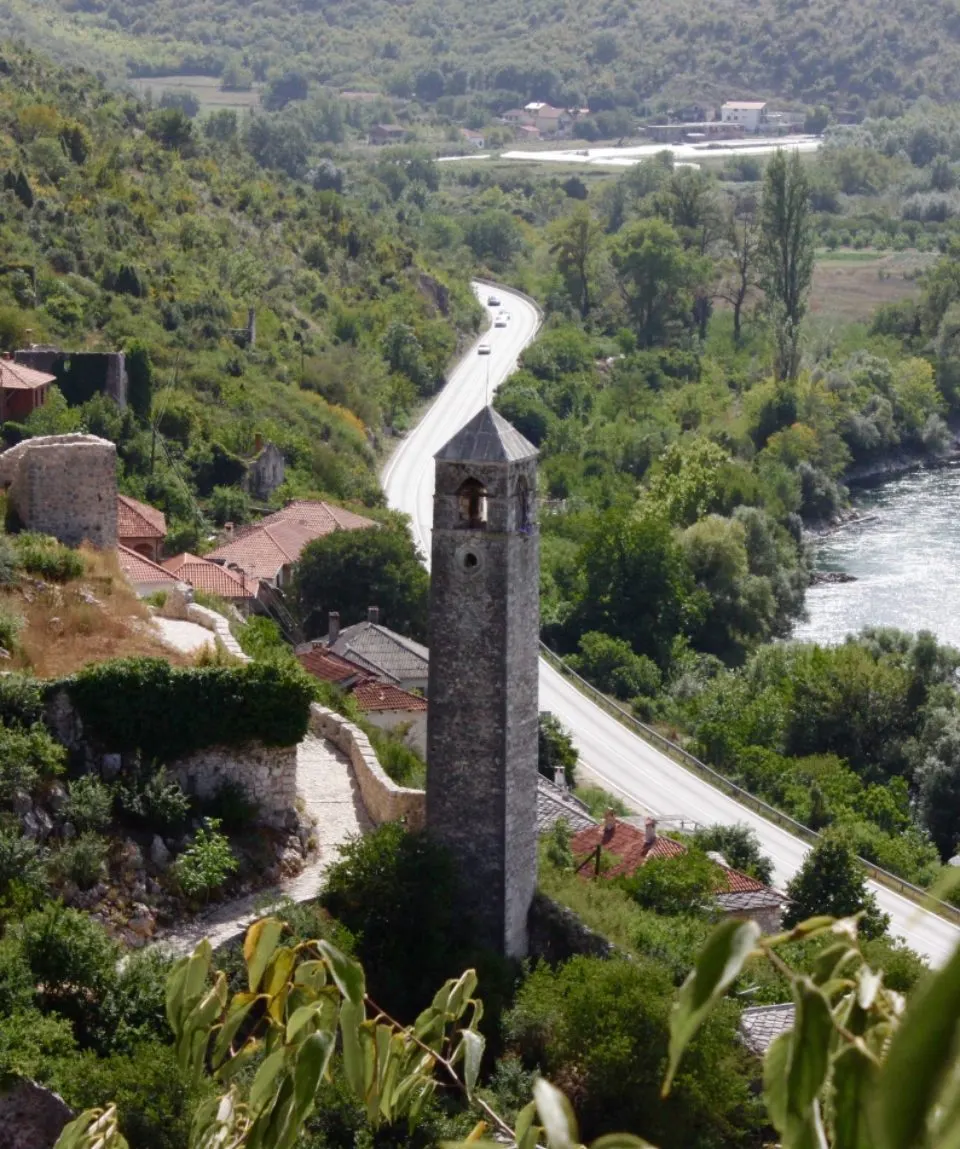
Thirty kilometres south of Mostar, clinging to a steep hillside above the Neretva, Počitelj is one of the best-preserved medieval fortified towns in the Balkans. The village cascades downhill in a tumble of stone walls, staircases, pomegranate trees, and Ottoman-era architecture — a citadel at the top, a mosque and hamam in the middle, and a han (inn) at the base.
The climb to the citadel tower is short but steep. From the top, you look down over terracotta roofs and green valleys stretching toward the coast. Počitelj has been continuously inhabited since at least the 15th century and was an important stronghold during the medieval Bosnian Kingdom and the Ottoman period that followed. Today, it functions as an artists' colony — painters and sculptors work in the restored stone houses during summer residencies.
Stop at the small gallery near the entrance and buy a pomegranate juice from the women selling fruit at the gate. Počitelj is often combined with a trip to Kravice Waterfalls, as they're on the same road heading south.
Crooked Bridge (Kriva Cuprija)
Everyone photographs Stari Most, but Mostar has a second Ottoman bridge that's arguably more charming. Kriva Ćuprija — the Crooked Bridge — was built in 1558, eight years before its famous neighbour, partly as a test run for the engineering techniques that would later be used on Stari Most. It's smaller, quieter, and arches over a narrow stream called the Radobolja in a residential corner of the old town.
There are no crowds here, no souvenir stalls, just an ancient stone bridge over clear water with cats sleeping on the warm parapet. It's a five-minute walk from Stari Most, but most tourists never find it.
Muslibegovica House: Ottoman Domestic Life
If the mosques show Ottoman public life, Muslibegovića Kuća shows private life. This 18th-century Ottoman house — one of the finest in Bosnia — has been restored as a museum and guesthouse. The interior is a revelation: carved wooden ceilings, divanhana (reception rooms) with low seating and fountain courtyards, separate quarters for men and women (selamluk and haremluk), and a hammam in the basement.
What strikes you most is the sophistication. Running water, heated floors, ventilation systems — Ottoman domestic architecture was centuries ahead of its European contemporaries in comfort and hygiene. You can tour the museum rooms and even stay overnight as a guest. The courtyard is one of the most peaceful spots in the city.
Spanish Square and the War Photo Exhibition
Mostar's modern history is inseparable from the 1992-1995 war, and understanding it adds depth to everything you see. The area around Bulevar — the former front line that divided the city — still bears traces of conflict, though much has been rebuilt. Spanish Square (Španski Trg) sits at the heart of this zone, named after the Spanish UN peacekeepers stationed here during the war.
Several galleries and exhibitions in the old town document the siege through photographs, personal stories, and artefacts. The War Photo Exhibition near Stari Most presents powerful images from the conflict. It's not easy viewing, but it's essential context for understanding what the bridge's reconstruction truly meant to this city.
Stolac and Radimlja Stecci Necropolis
The small town of Stolac, 40 minutes southeast of Mostar, is worth a full morning. The town itself is built around a dramatic river gorge with Ottoman bridges, watermills, and a hilltop fortress. But the main draw is the Radimlja necropolis just outside town — the most impressive and accessible collection of stećci (medieval tombstones) in Herzegovina.
The site holds over 130 tombstones dating from the 14th and 15th centuries, many with elaborate carvings of human figures, deer, spirals, swords, and grapevines. The figures are stylised and oddly modern-looking — arms raised, some appearing to dance. These are the same motifs you'll find on the walls and drinking horns at Timber & Stone Tavern, drawn directly from this artistic tradition that has no parallel anywhere else in Europe.
Hammam and Turkish Bath Experience
Several restored hammams in Mostar offer traditional Turkish bath experiences — steam rooms, warm marble slabs, and the ritual of peeling off layers of the old town's dust after a long day of walking. The experience is deeply relaxing and historically authentic. Ottoman baths were social spaces as much as hygienic ones, and spending an afternoon in one connects you to five centuries of local custom.
Neretva River Rafting and Kayaking
The Neretva is not just beautiful to look at — it's one of the best whitewater rivers in Southern Europe. Rafting trips depart from points upstream of Mostar, running through canyons of extraordinary beauty before finishing near the city. The rapids range from gentle to genuinely challenging depending on the season and the section. Several local operators offer half-day and full-day trips.
For something calmer, kayaking on the Neretva through Mostar itself gives you a perspective of the city that no walking tour can match — paddling beneath Stari Most and looking up at the bridge from water level is unforgettable.
Kravice Waterfalls
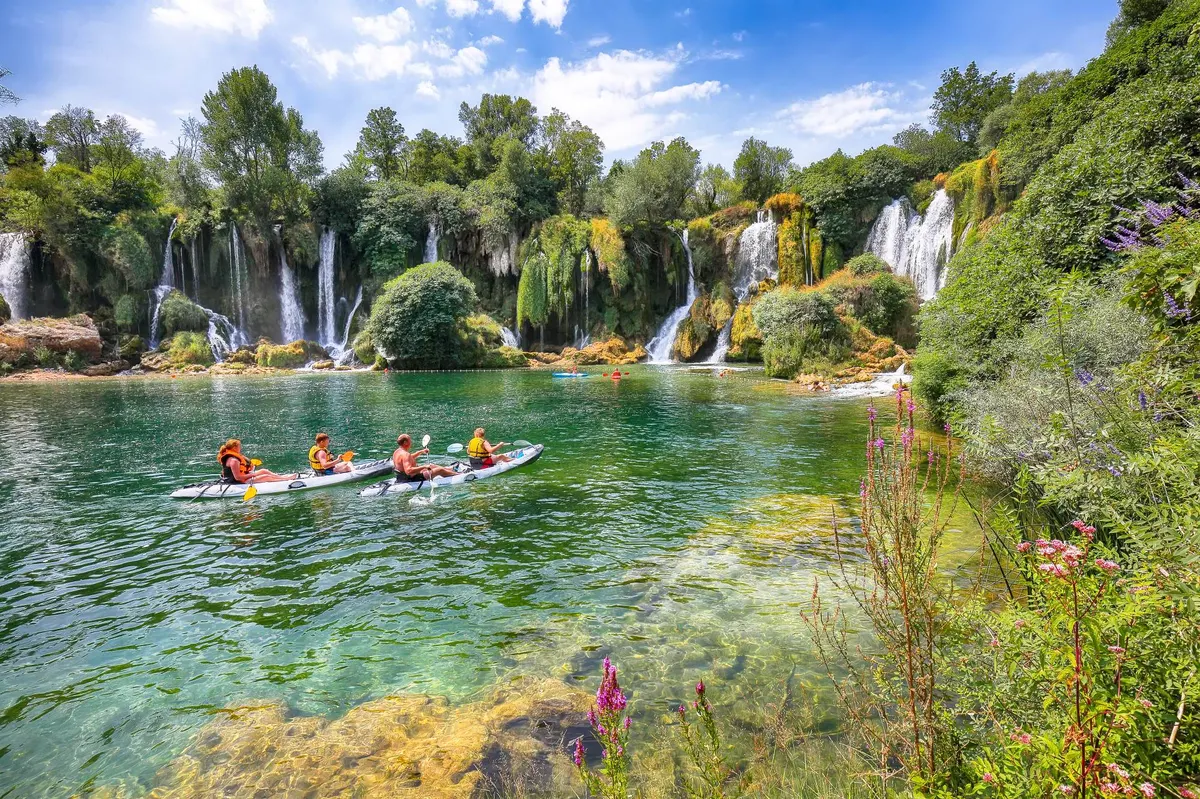
About 40 kilometres south of Mostar, the Trebizat River drops over a wide crescent of travertine into a pool of startling turquoise. Kravice Waterfalls is Herzegovina's answer to Plitvice — smaller, less famous, and in summer, warm enough to swim in. The falls are roughly 25 metres high and 120 metres wide, surrounded by dense green forest.
Visit in spring when the water volume is at its peak and the surrounding woods are wildly green. In summer, it becomes a popular swimming spot — bring a towel and shoes you don't mind getting wet. There's a small entrance fee and basic facilities at the site.
Wine Tasting in Herzegovina
Herzegovina's wine tradition is ancient — vines have grown here since Roman times, and the local blatina and zilavka grape varieties produce wines found nowhere else on earth. The Neretva valley and the area around Citluk, Medjugorje, and Stolac are dotted with family-run wineries where tastings are informal, generous, and often accompanied by home-cured prsut (smoked ham) and local cheese.
Zilavka is the white — dry, mineral, with a flinty edge that suits the rocky terroir. Blatina is the red — medium-bodied, slightly earthy, excellent with grilled meat. Several wineries around Citluk (a 30-minute drive from Mostar) welcome visitors without appointment, though calling ahead is always polite.
Practical Tips for Visiting Mostar
- Best time to visit: Late April through June, and September through mid-October. Summer (July-August) is hot — temperatures regularly exceed 38 degrees celsius — and the old town gets crowded with day-trippers from the coast. Spring and autumn offer warm weather, thinner crowds, and better light for photography.
- Getting around: The old town is compact and walkable. For day trips (Blagaj, Kravice, Stolac), rent a car or arrange a taxi. Local buses connect Mostar to Blagaj and Citluk but run infrequently. Uber doesn't operate here — use local taxi companies or ask your accommodation to arrange transport.
- Currency: Bosnia uses the convertible mark (BAM/KM). Cards are accepted in most restaurants and hotels but bring cash for market purchases, small cafes, and entrance fees.
- Language: Bosnian/Croatian/Serbian. English is widely spoken in tourist areas. Learning "hvala" (thank you) and "molim" (please) goes a long way.
- Weather: Mediterranean-continental climate. Summers are dry and intensely hot. Winters are mild but wet. The Neretva valley can be windy — the bura (north wind) is fierce when it blows.
End the Day at the Table
After a day of climbing minarets, chasing waterfalls, and tracing your fingers over medieval carvings, you need a proper meal. At Timber & Stone Tavern, we cook the way Herzegovina has cooked for centuries — sac-roasted lamb, slow-simmered stews, and seasonal dishes drawn from the same land you've been exploring all day.
Call us at +387 62 607 906 to reserve your table, or book online. We're in the old town, a short walk from Stari Most — the perfect end to a day spent discovering what makes this city unforgettable.
"The best way to understand a place is to eat what it grows. In Herzegovina, the land and the table are the same thing."