What to Eat in Mostar
The Heart of Bosnian Cuisine
Bosnian food is not delicate. It is not fussy. It is the kind of cooking that was born from necessity and perfected through centuries of patience — food made by people who understood fire, seasons, and the slow passage of time. In Mostar, these traditions run especially deep. The Neretva River valley provides the ingredients; the Herzegovinian sun concentrates the flavours; and the stone kitchens of the old town keep the methods alive.
What makes eating in Mostar different from Sarajevo or other Bosnian cities is the Mediterranean influence. You will find more lamb than beef, more fresh vegetables, olive oil alongside kajmak, and a lightness in the cooking that reflects the warmer climate. Herzegovina has always been the fertile half of the country — grapes, figs, pomegranates, and herbs grow wild on the hillsides.
Cevapi: The National Obsession
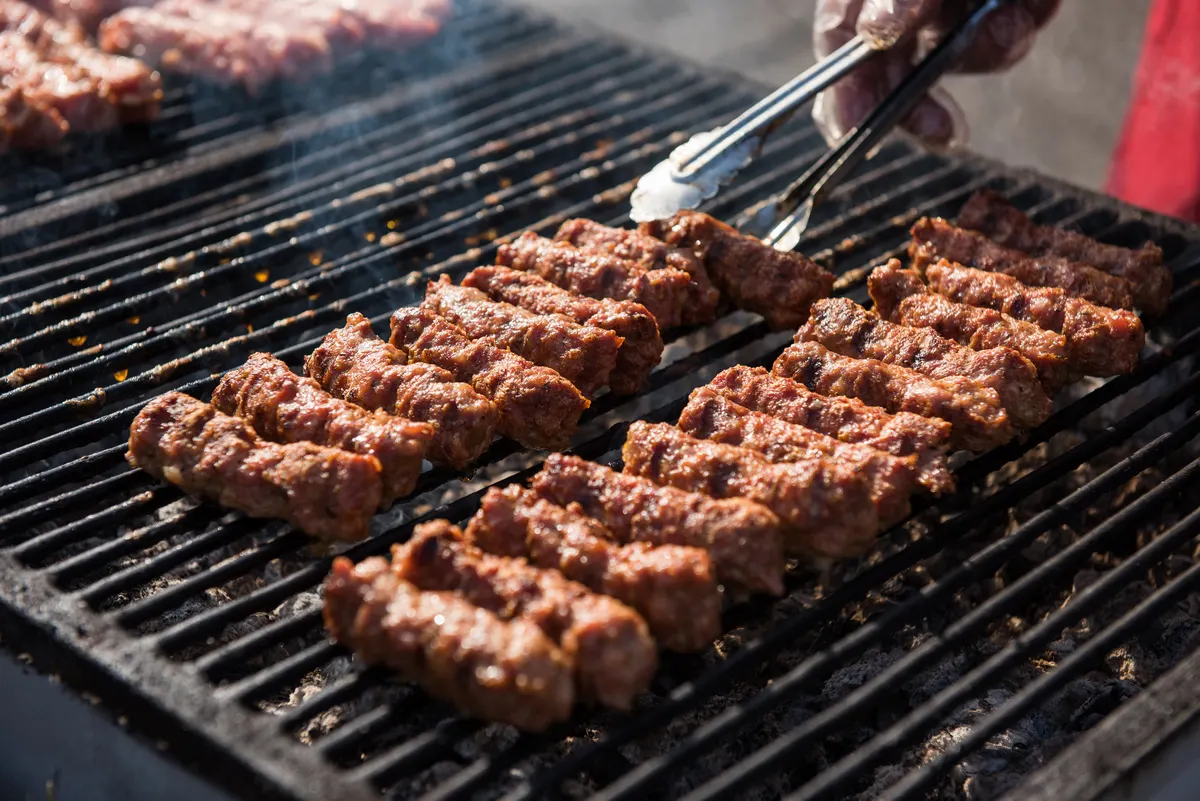
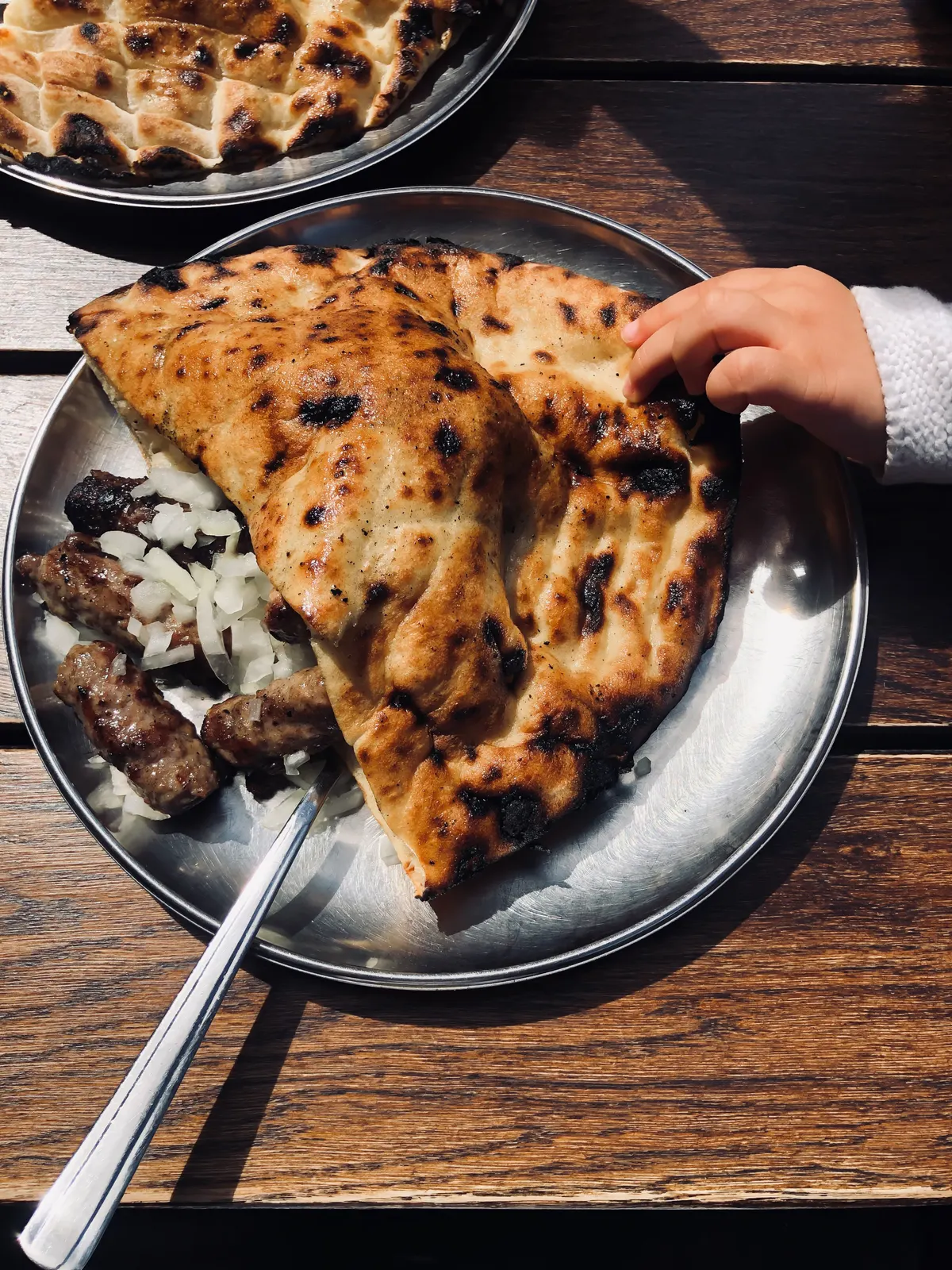
No guide to Bosnian food can begin anywhere else. Cevapi are small, hand-rolled cylinders of minced meat — usually a blend of beef and lamb — grilled over charcoal and served in soft somun bread with raw onion and sometimes kajmak, a rich clotted cream. They are the street food of Bosnia, served from morning until late at night, and every city claims theirs are the best.
In Mostar, cevapi tend to be slightly smaller than the Sarajevo version, and the meat blend often leans heavier on lamb. You will find cevapi shops scattered throughout the old town and around Mala Tepa market. The best ones use meat ground fresh that morning, and the somun comes from a wood-fired oven attached to the shop itself.
Sač-Cooked Meats: The Slow Feast
If cevapi are the quick everyday meal, then sač cooking is the celebration. The sač is a heavy iron or clay bell placed over food and buried under hot embers. Inside, meat and vegetables cook in their own juices for hours — sometimes as long as eight — until the lamb falls from the bone and the potatoes have absorbed every drop of flavour.
The most common sač dishes in Mostar are lamb under the bell (jagnjetina ispod sača) and veal under the bell (teletina ispod peke). Both are typically cooked with potatoes, onions, garlic, and a scattering of seasonal vegetables. The technique dates back to medieval Bosnia, when the Bosnian Kingdom's nobility would feast on meats prepared in this way.
At Timber & Stone Tavern, sač cooking is central to everything we do. Our kitchen prepares lamb and veal under the bell using traditional methods that require at least eight hours of advance notice. It is not fast food — it is food that rewards patience, and every bite tells you why it was worth the wait.
Bosanski Lonac: The One-Pot Wonder
Bosanski lonac — literally "Bosnian pot" — is a layered stew of meat and vegetables cooked slowly in a tall clay vessel. The beauty of lonac is in its construction: layers of beef, lamb, cabbage, carrots, potatoes, peppers, and tomatoes are stacked carefully, seasoned with whole peppercorns and bay leaves, then sealed and left to cook for hours. No stirring, no interference. The pot does the work.
The result is a rich, deeply flavoured broth with tender meat and vegetables that have melded into something greater than their parts. Lonac is winter food at its finest, though in Mostar you will find it served year-round in restaurants that take pride in the old ways. We serve our own bosanski lonac at Timber & Stone — traditional highland recipe, clay pot, hours of patience.
Japrak, Dolma, and the Stuffed Tradition
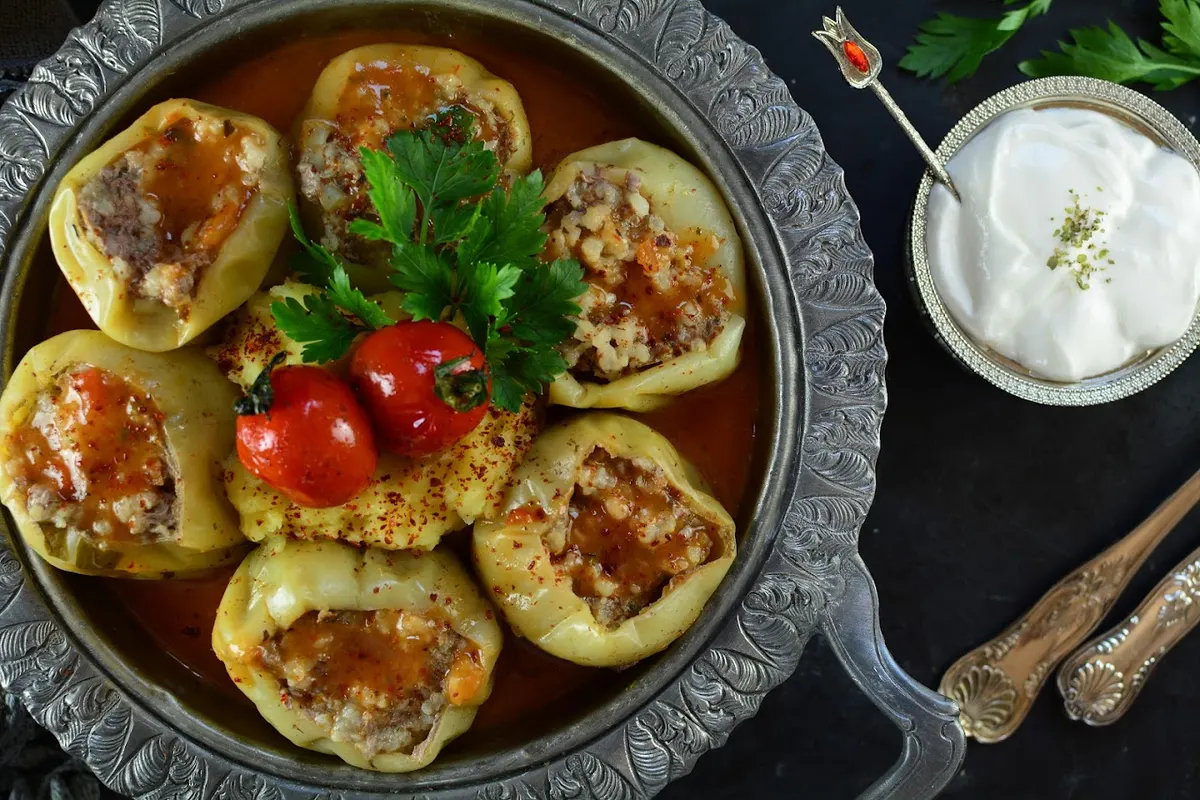
Bosnians are masters of stuffing things. Japrak — grape leaves wrapped around a filling of minced meat, rice, and spices — is a summer staple when the vines produce tender young leaves. Dolma refers to the same technique applied to peppers, onions, courgettes, or any vegetable with a cavity worth filling.
The filling usually combines beef or a beef-lamb mixture with rice, onion, and a careful balance of paprika, pepper, and sometimes a touch of dried mint. The stuffed vegetables are packed tightly into a pot and braised in a tomato-based sauce until everything is soft and the flavours have concentrated. Served with a dollop of pavlaka (sour cream), this is comfort food that has been passed down through Herzegovinian families for generations. Our japrak & dolma at Timber & Stone comes with potato mash and cream — the way it's done in Herzegovinian homes.
Burek and Pita: The Pastry Question
Ask any Bosnian about burek and you will get an opinion. Technically, burek refers specifically to the meat-filled version — spirals or tubes of thin phyllo-like dough called jufka, layered with seasoned minced beef. The cheese version is sirnica, the spinach version is zeljanica, and the potato version is krompiruša. Collectively, they are all called pita.
In Mostar, the best burek comes from small bakeries (called buregdžinice) where the jufka is stretched by hand until it is nearly transparent. The rolls are arranged in a large round tray called a tepsija and baked until golden and crispy. Eat it fresh, with a glass of plain yoghurt on the side — this is the traditional way, and deviating from it is considered mildly offensive.
If zeljanica is more your style, we make our own version at Timber & Stone — handmade flaky filo layered with spinach and fresh cheese from the highland pastures. It pairs beautifully with our mezze board and a glass of Herzegovinian wine.
Mezze and Small Plates
A proper Bosnian meal often begins with a spread of small dishes: kajmak (that incomparable clotted cream), sudžuk (dried beef sausage), local cheese from the Herzegovinian highlands, ajvar (roasted red pepper relish), and warm bread. This is the mezze tradition, influenced by centuries of Ottoman rule but adapted with local ingredients.
In Mostar, you will also find excellent honey from the hills above the city, dried figs, walnuts, and sometimes smoked meats that reflect the region's Mediterranean-meets-mountain character. A good mezze plate with a glass of local wine or a small rakija is the perfect way to begin any evening.
Tufahija: The Sweet Finish
No meal in Mostar is complete without something sweet, and tufahija is the queen of Bosnian desserts. It is a whole apple, poached in sugar syrup, cored and stuffed with a walnut filling, then topped with whipped cream. The combination of soft, syrup-soaked fruit with the crunch of walnuts is simple and perfect.
We serve tufahija at Timber & Stone as the traditional sweet finish — the cold syrupy apple after a warm hearth-cooked meal is exactly the contrast a Bosnian dinner needs. You will also find baklava throughout the old town — the Bosnian version uses walnuts rather than pistachios and is soaked in a lighter syrup than its Turkish cousin. Hurmasice (syrup-soaked pastry cakes) and ružice (rose-shaped pastries) round out the dessert selection.
"In Herzegovina, we do not rush food. The fire knows when it is ready. You just have to trust it."
Where Medieval Tradition Meets the Table
What makes Mostar's food scene special is not just the dishes themselves but the continuity of tradition. The sač technique used in restaurants today is the same method described in accounts of medieval Bosnian Kingdom feasts. The clay pots used for lonac are the same shape they were four hundred years ago. Even the communal style of eating — long tables, shared plates, meals that last for hours — echoes the way the Bosnian nobility once dined.
At Timber & Stone Tavern, we built our entire concept around this connection. Our menu draws from the hearth cooking traditions of medieval Bosnia, our dining room is designed around long communal tables of oak and stone, and every dish is prepared with the patience that this cuisine demands. If you want to experience what Bosnian food was always meant to be, reserve a table and let us show you.
For reservations or questions about our menu, call us at +387 62 607 906 — we are happy to help you plan the perfect meal.