Where to Eat in Mostar
Understanding Mostar's Food Geography
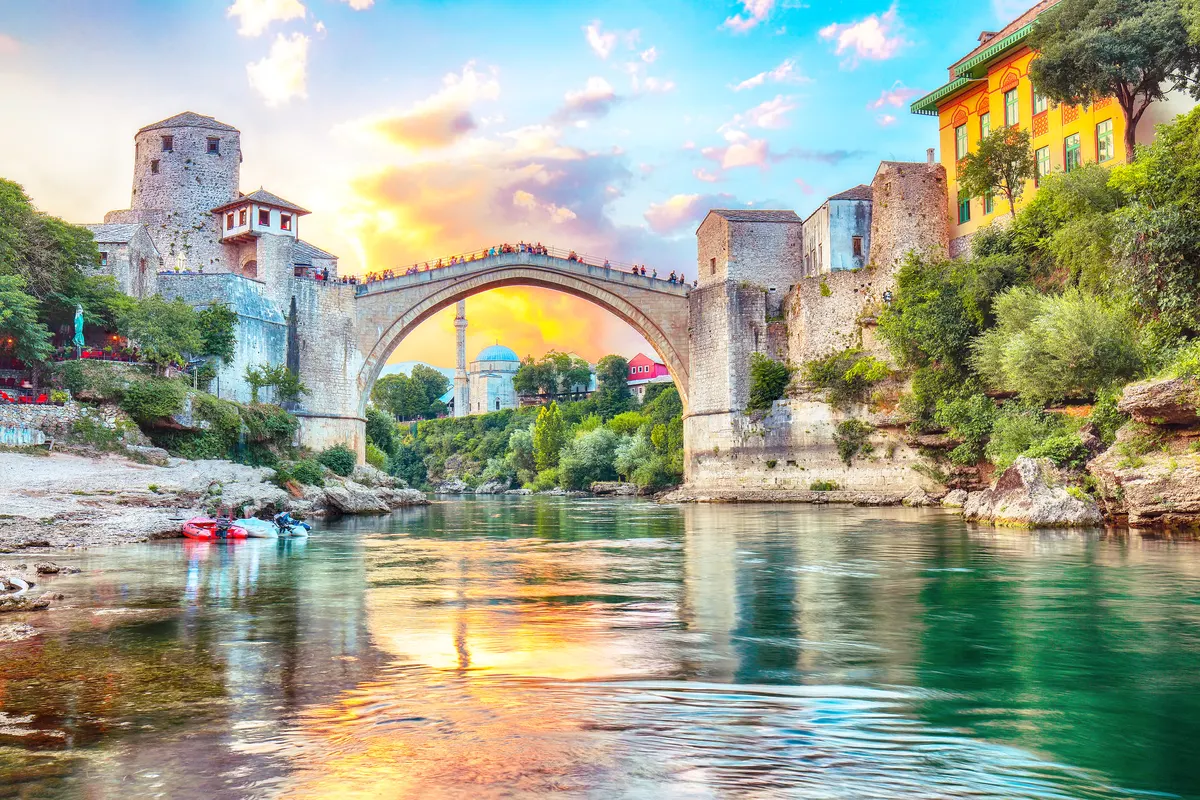
Mostar is divided by the Neretva River, and the dining scene follows that divide. The east side — the Old Town — is where most visitors eat, and it has the highest concentration of restaurants. The west side is where locals live and eat, and the food there is often better and always cheaper. Understanding this divide is the first step to eating well in Mostar.
The Old Town is compact and walkable. Most restaurants cluster along Kujundžiluk (the cobblestone bazaar street leading to Stari Most), along the Neretva riverbank, and in the narrow lanes behind the Koski Mehmed Pasha Mosque. The west side spreads out more, with restaurants and bakeries scattered along the main boulevards and tucked into residential neighbourhoods.
Old Town: Tourist Area, But Worth It
Yes, the Old Town is touristy. Yes, prices are higher than on the west side. But dismissing the entire area would mean missing some genuinely excellent restaurants. The key is knowing which ones are trading on location alone and which ones actually deliver.
The best Old Town restaurants tend to be the ones set slightly back from the main strip — not directly on Kujundžiluk or the bridge approach, but a lane or two off the main path. These places rely on reputation rather than foot traffic, and the food shows it. Look for restaurants where locals are eating alongside tourists — that is always a reliable indicator.
Timber & Stone Tavern sits in the heart of the Old Town but draws from a different tradition entirely. Our medieval Bosnian concept — sač-roasted meats, bosanski lonac, long communal tables — is built around the food traditions of the region rather than the tourist economy. Every dish requires hours of preparation, which means we cook for guests who plan ahead, not passersby looking for a quick meal.
The Burek Circuit: Breakfast Like a Local
The most important meal decision in Mostar happens before most tourists are awake. Burek bakeries (buregdžinice) start firing up their ovens before dawn, and the first trays of fresh burek, sirnica, zeljanica, and krompiruša come out around 6 AM. By 8 AM, the best trays are gone.
A proper Mostar breakfast means a portion of burek (or whichever pita you prefer) with a glass of cold, plain yoghurt. Not flavoured yoghurt — plain, drinkable, slightly sour. This combination is non-negotiable. Ordering burek with anything else marks you as an outsider immediately.
The best bakeries are on the west side, away from the tourist area. They are small, they are no-frills, and they sell out early. If there is a queue of construction workers and taxi drivers at 7 AM, you are in the right place.
Cevapi: The Daily Ritual
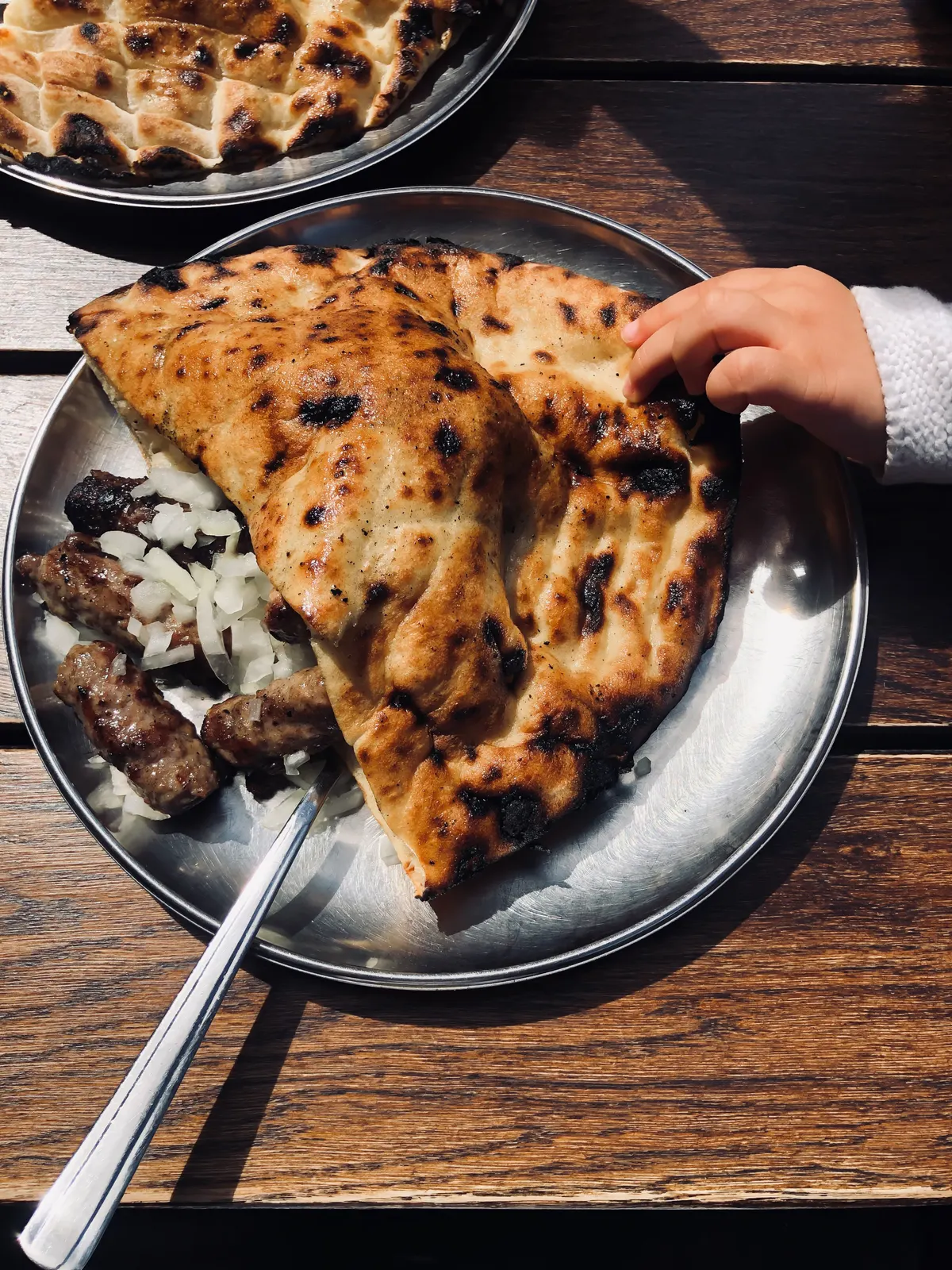
After burek, the next most important food decision is where to eat cevapi. Mostar has dozens of ćevabdžinice (cevapi shops), ranging from tourist-facing places in the Old Town to neighbourhood joints that have been serving the same recipe for decades.
The best cevapi shops share certain traits: they grind their meat daily, they bake their own somun, and they use real charcoal rather than gas. The portion typically comes as a serving of ten cevapi in warm somun bread with raw onion. Some places offer kajmak (clotted cream) as an extra — always say yes.
For the full history and breakdown of what makes Mostar cevapi different, read our guide to Bosnian cevapi.
West Side: Where Locals Eat
Cross the Neretva to the west side and the tourist prices drop by half. This is where Mostar's working population eats lunch — in small restaurants called ašćinice that serve ready-made traditional dishes cafeteria-style. You point at what you want, they plate it, and the bill rarely exceeds a few euros.
The typical ašćinica menu rotates daily but usually includes: bosanski lonac, grah (bean stew), stuffed peppers (dolma), japrak, bamja (okra stew), and various grilled meats. The food is simple, hearty, and made fresh that morning. This is everyday Bosnian home cooking, and it is some of the best food in the city.
These places do not have websites, most do not have English menus, and they close when the food runs out — typically by mid-afternoon. If you want authentic Bosnian food without any pretension, this is where to find it.
Coffee Culture: Slow Down
Bosnian coffee is a ritual, not a caffeine hit. In Mostar, coffee shops (kafane) are social institutions where people sit for hours. The coffee itself comes in a copper džezva with small cups, a sugar cube, and a glass of water. You pour it yourself, slowly, and the process is the point.
The best coffee spots in Mostar are along the Neretva, where you can watch the river while the coffee settles. Morning coffee in Mostar is a sacred hour — locals arrive around 9 or 10 AM, order one coffee, and stay for an hour of conversation. Nobody rushes you, and asking for the bill is considered premature if the cup is not empty.
Evening Dining: The Long Table
Mostar comes alive in the evening. The heat of the day breaks, the terraces fill up, and the pace of eating shifts from functional to celebratory. Evening meals in Mostar are meant to be long — multiple courses, shared plates, local wine, and conversation that stretches past midnight.
For evening dining, the Old Town comes into its own. The stone streets cool down, the lights reflect off the Neretva, and restaurants that feel touristy by day transform into something more atmospheric after dark. This is when sač-cooked dishes come out — lamb and veal that have been cooking since morning, falling off the bone, served family-style at long tables.
At Timber & Stone, evening is when we are at our best. The hearth fire is lit, the sač dishes are ready, and the communal tables are set for sharing. It is the way Bosnian meals were always meant to be — slow, generous, and communal. Reserve your table and let us take care of the rest.
Wine and Drinks
Herzegovina produces excellent wine that most visitors do not know about. The indigenous Žilavka (white) and Blatina (red) grapes thrive in the Neretva valley's Mediterranean climate, and local wineries produce bottles that rival anything from Croatia or Slovenia at a fraction of the price.
Most restaurants in Mostar carry local wines, but the selection varies widely. For the best experience, ask for "domaće vino" (local wine) and specify white or red. A meal without wine in Herzegovina is considered incomplete — even a small glass with lunch is perfectly normal.
Rakija comes after the meal, not before. Loza (grape), šljivovica (plum), and medovača (honey) are the most common varieties. Learn the full story in our guide to Bosnian rakija.
Practical Tips for Eating in Mostar
- Lunch is the main meal — many traditional restaurants are at their best between noon and 3 PM.
- Sač dishes need advance ordering — call ahead if you want lamb or veal under the bell.
- Cash is still king — smaller restaurants and bakeries may not accept cards.
- Tipping is 5-10% — simply round up the bill or leave a few marks on the table.
- Portions are generous — one main dish is usually enough for most appetites.
- Ask for recommendations — Bosnians love talking about food and will gladly steer you right.
"In Mostar, every meal is an invitation. Sit down, slow down, and let the food come to you."
For a meal built around Mostar's oldest cooking traditions — sač-roasted meats, clay-pot stews, and the medieval hearth — reserve a table at Timber & Stone Tavern or call +387 62 607 906.