Traditional Bosnian Food
What Makes Bosnian Food Unique
Bosnian food sits at a cultural crossroads unlike anywhere else in Europe. Four centuries of Ottoman rule left behind a culinary vocabulary of stuffed vegetables, layered pastries, thick coffee, and syrup-soaked sweets. But underneath that Ottoman layer lies something older — the cooking of the medieval Bosnian Kingdom, with its emphasis on fire, iron, stone, and the slow transformation of simple ingredients through time and heat.
What makes Bosnian cuisine distinct from its neighbours is this layering of influences. It is not Turkish food, though the echoes are unmistakable. It is not Serbian or Croatian food, though the ingredients overlap. It is something uniquely its own — heavier than Mediterranean, more refined than mountain peasant cooking, and built on a relationship with fire that borders on reverence.
In Herzegovina, where Mostar sits at the centre of a sun-drenched valley, there is an additional Mediterranean influence. More lamb, more fresh herbs, olive oil alongside the kajmak, wine alongside the rakija. The food here is the best of both worlds — the hearty traditions of the Bosnian highlands tempered by the warmth and freshness of the Adriatic hinterland.
Cevapi: The National Dish
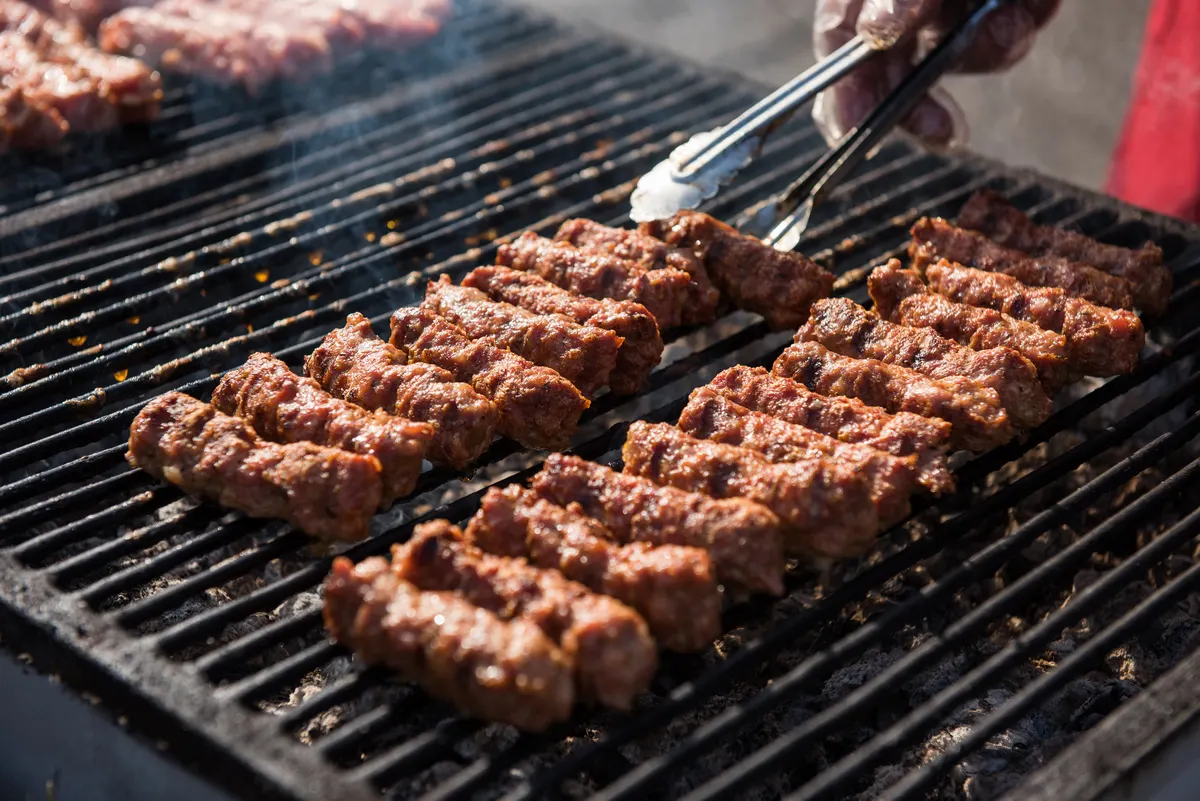
If Bosnia has a national dish, it is cevapi — small cylinders of minced meat (typically a blend of beef and lamb), hand-rolled and grilled over charcoal, served in warm somun bread with raw onion and sometimes kajmak. They are simple, ancient, and impossible to improve upon.
Every region claims theirs are best. In Sarajevo, cevapi come in portions of five or ten, arranged in a row, slightly larger and with more beef in the blend. In Mostar, they tend to be smaller, with more lamb, and the somun bread is lighter, reflecting the Mediterranean climate. The debate between the two cities has been running for centuries and shows no sign of resolution.
The best cevapi come from shops that grind their own meat daily and bake their somun in wood-fired ovens attached to the kitchen. The charcoal grill is non-negotiable — gas or electric simply does not produce the same flavour. Read our full guide to Bosnian cevapi for a deeper dive into the history and the regional variations.
Burek and Pita: The Pastry Tradition
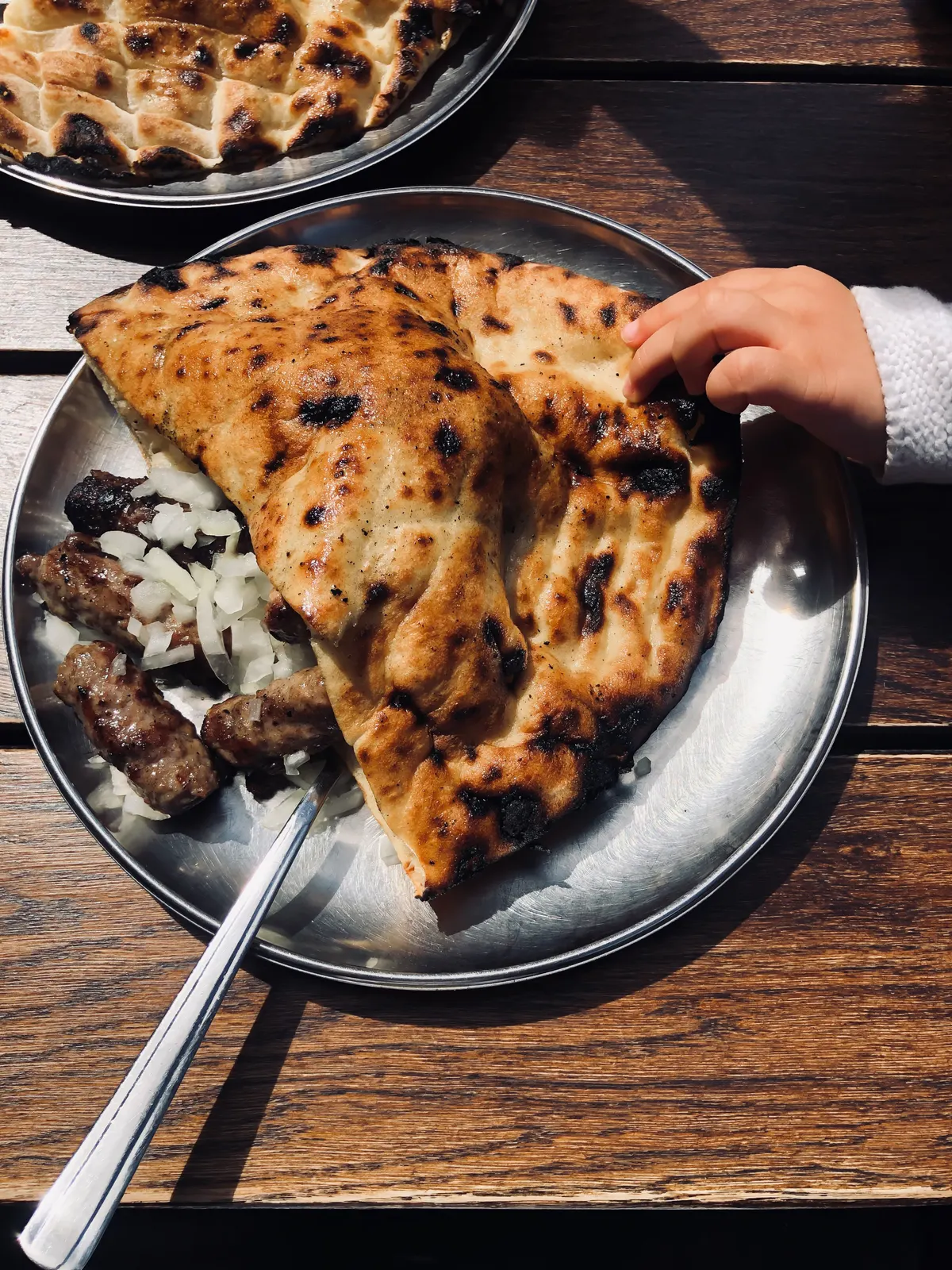
Burek is the other cornerstone of Bosnian food culture. In Bosnia, burek specifically means the meat-filled version — thin layers of hand-stretched dough (jufka) wrapped around seasoned minced beef and baked in a large round tray. The cheese-filled version is sirnica, spinach is zeljanica, and potato is krompiruša. Together, they are all called pita.
The dough is the key. A skilled baker can stretch jufka so thin that you can read newspaper through it — and the best burek is made with this impossibly thin dough, creating dozens of crispy, flaky layers around a savoury filling. Eaten fresh from the oven with a glass of plain yoghurt on the side, burek is both breakfast and spiritual experience.
The best burek comes from small neighbourhood bakeries (buregdžinice) rather than restaurants. These shops typically start baking before dawn and the first trays sell out within hours. If the burek has been sitting for a while, move on — it is meant to be eaten hot and fresh.
Sač Cooking: Under the Iron Bell
The sač is perhaps the most characteristically Bosnian cooking technique — a heavy iron or clay bell placed over food and buried under hot embers. Inside this primitive oven, meat and vegetables cook for hours in their own juices, producing flavours that no modern oven can replicate.
The most common sač dishes are lamb under the bell (jagnjetina ispod sača) and veal under the bell (teletina ispod peke). Both require advance ordering — typically four to eight hours — because the cooking cannot be rushed. At Timber & Stone Tavern, sač cooking is at the heart of our menu. Our lamb under sač is prepared with whole shoulder, potatoes, rosemary, and wild garlic, slow-roasted for eight hours beneath the iron dome and ember.
The technique dates back to the medieval Bosnian Kingdom, where it was used to cook feasts for nobility and warriors alike. Read our dedicated guide to sač cooking for the full history and technique.
Bosanski Lonac: The Layered Stew
Bosanski lonac — literally "Bosnian pot" — is a layered stew of meat and vegetables cooked slowly in a tall clay vessel sealed with bread dough. The layers alternate between meat (usually beef and lamb), cabbage, carrots, potatoes, peppers, and tomatoes, seasoned with whole peppercorns, bay leaves, and garlic. The pot is then sealed and left over low heat for hours — no stirring, no interference.
The result is extraordinary: a deeply complex broth, fall-apart tender meat, and vegetables that have absorbed every neighbouring flavour. It is quintessential highland cooking, designed for cold mountain winters, though in Mostar it is served year-round. Our own version at Timber & Stone follows the traditional highland recipe — clay pot, open flame, and hours of patience.
Dolma and Japrak: The Stuffed Tradition
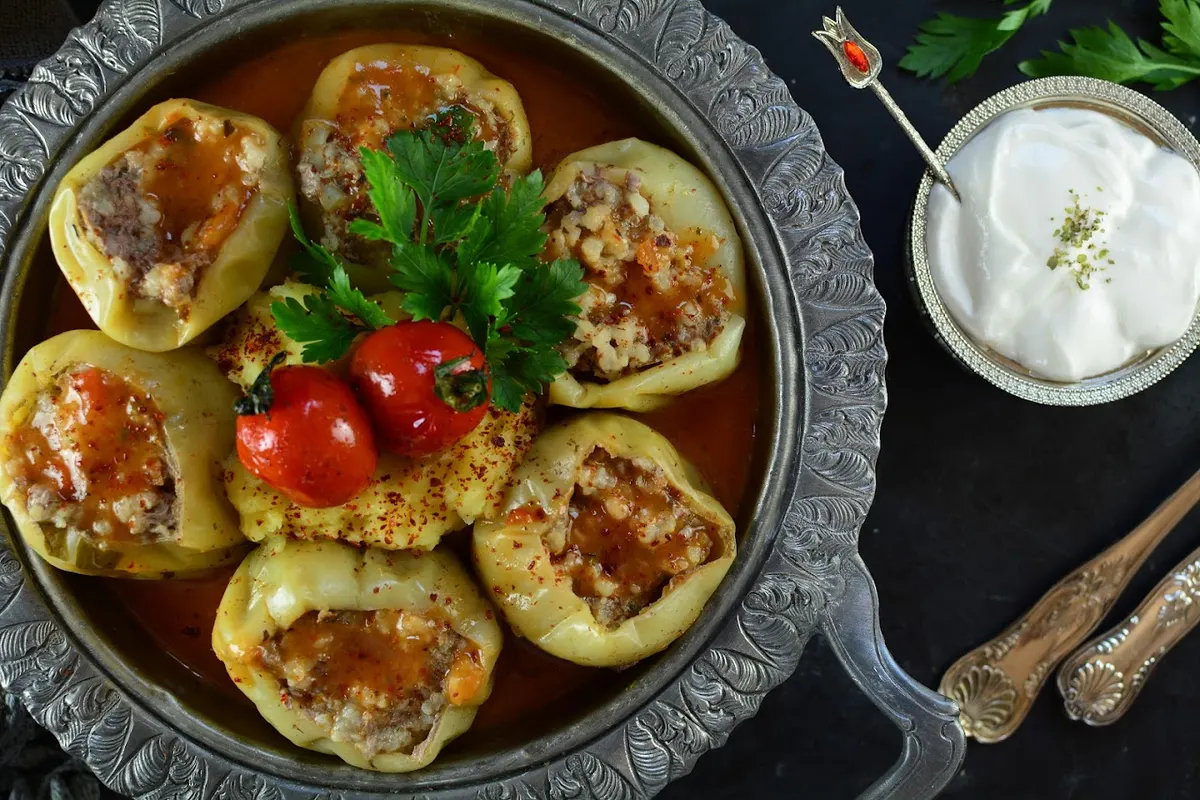
Bosnians stuff everything. Dolma refers to vegetables — typically peppers, onions, and courgettes — filled with a mixture of minced meat, rice, and spices, then braised in tomato sauce. Japrak is the same filling wrapped in grape leaves (or sometimes collard greens) and cooked the same way.
The Bosnian version differs from Turkish dolma in its seasoning — more paprika, less mint, and a heavier, more robust filling. It is home cooking at its most essential, the kind of dish that every Bosnian grandmother has her own version of. Served with sour cream (pavlaka) and warm bread, dolma and japrak are comfort food that transcends seasons. Read more in our guide to Bosnian dolma.
Begova Čorba: The Nobleman's Soup
Begova čorba (bey's soup) is a rich, creamy chicken soup thickened with a roux and enriched with okra, carrots, and celery. It originated in the kitchens of Bosnian Ottoman nobility — the beys — and remains one of the most refined dishes in Bosnian cuisine. It is typically served as a first course and is the traditional starter at festive meals and celebrations.
Klepe: Bosnian Dumplings
Klepe are small dumplings filled with seasoned minced meat, similar in concept to Turkish manti but shaped differently — folded into small half-moons and boiled until the dough is tender. They are typically served drowned in a garlic-infused yoghurt sauce and topped with paprika butter. It is the kind of dish that shows the depth of Ottoman influence on Bosnian cooking — delicate, labour-intensive, and deeply satisfying.
Bosnian Coffee: More Than a Drink
Bosnian coffee is not espresso, and it is not Turkish coffee, despite appearances. The preparation involves bringing finely ground coffee to a foam in a small copper pot called a džezva, then pouring it into small ceramic cups called fildžan. The key difference from Turkish coffee: the grounds are added to water that has already started to boil, not cold water. The result is stronger, with a thicker foam (kaimak) on top.
Coffee in Bosnia is not a caffeine delivery system — it is a social ritual. It is always served with a sugar cube (not stirred in), a glass of water, and often a piece of rahat lokum (Turkish delight). A proper Bosnian coffee session can last an hour, and refusing an offered coffee is considered genuinely rude.
Bosnian Desserts
Bosnian sweets are drenched in syrup and built around walnuts. Baklava — the Bosnian version uses walnuts rather than pistachios — is the most famous, but tufahija (poached apples stuffed with walnuts), hurmasice (syrup-soaked pastry cakes), and ružice (rose-shaped walnut pastries) are equally essential. All are designed to be eaten slowly alongside Bosnian coffee. For the full story, see our guide to Bosnian baklava and desserts.
Drinks: Rakija and Wine
No Bosnian meal is complete without rakija — fruit brandy distilled from plums (šljivovica), grapes (loza), or infused with honey (medovača). Herzegovina also produces excellent wines, particularly from the indigenous Žilavka (white) and Blatina (red) grape varieties. The wine tradition here dates back to the Roman era, and the sun-soaked Neretva valley produces some of the best wines in the Balkans. Learn more in our guide to Bosnian rakija.
Experience Traditional Bosnian Food in Mostar
At Timber & Stone Tavern, we built our entire restaurant around these traditions. Our menu draws from the hearth cooking of the medieval Bosnian Kingdom — sač-roasted lamb, bosanski lonac in clay pots, handmade japrak and dolma, and desserts that follow the old Herzegovinian recipes. Every dish is cooked with patience and served at long communal tables of oak and stone, the way Bosnian meals were always meant to be shared.
If you are visiting Mostar and want to experience traditional Bosnian food the way it has been eaten for centuries, reserve a table or call us at +387 62 607 906.